Featured September 2026

The Future of Airport Parking Revenue
Car parking makes up 43.2% of North American airports’ non-aeronautical revenue, and Waymo-level robotaxi pricing could eventually undercut a multi-day parking stay by half—but with driverless service live at just four U.S. airports and access still airport-controlled, Avinia’s analysis puts the real disruption window at 2030–2040, not next year.
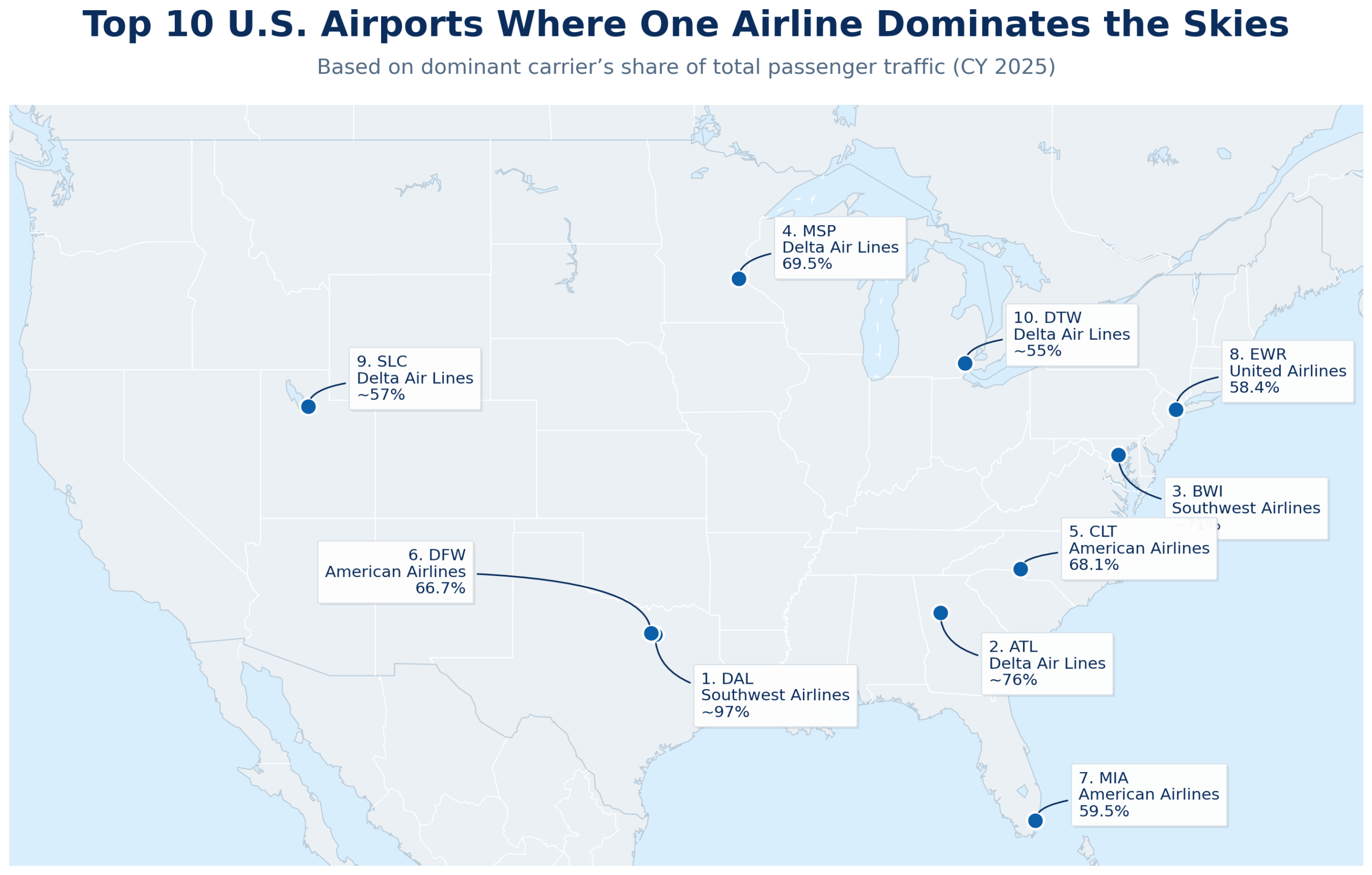
When One Airline Dominates: What U.S. Fortress Hubs Mean for Fares
Southwest carries 97% of passengers through Dallas Love Field and Delta over 70% at Atlanta, yet DOT fare data shows dominance alone doesn’t set the price—Southwest’s fortress hubs run at or below the national average while every merger-inherited legacy hub on this list carries at least a 10% fare premium.
Featured Insights from Avinia Labs
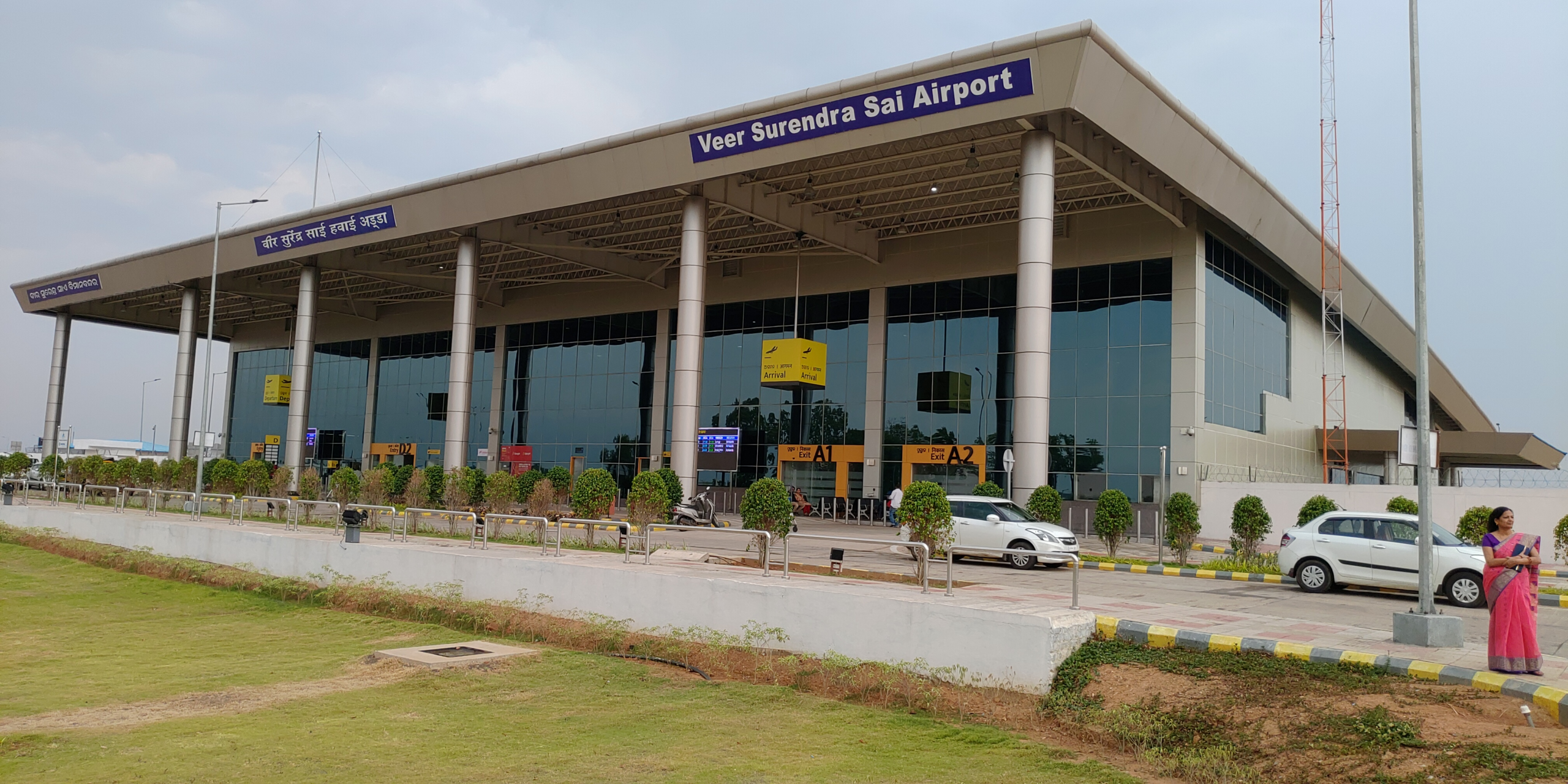
What Eleven Years of Monthly City-Pair Data Say About UDAN — and Everything Else
Eleven years of monthly city-pair data, set against the 679-route RCS-UDAN list, show India’s domestic network splitting into two tracks — a “Legacy” network growing at a 6.4% CAGR versus UDAN subsidy-driven one that still trails it ninefold on passengers per route—with regional successes like Darbhanga and Jharsuguda sitting next to outright failures like Pakyong.

The Commercial Terminal — Legibility, Dwell and Non-Aero Yield in India
Airport tariff filings across eight major Indian airports, restated on a per-passenger basis, show non-aeronautical income splitting two ways — duty free explains as little as 6.5% of it, while the terminal’s ordinary commercial estate and land/landside revenue do the rest—the airports earning less aren’t earning less from passengers, they’re earning it from somewhere else entirely.
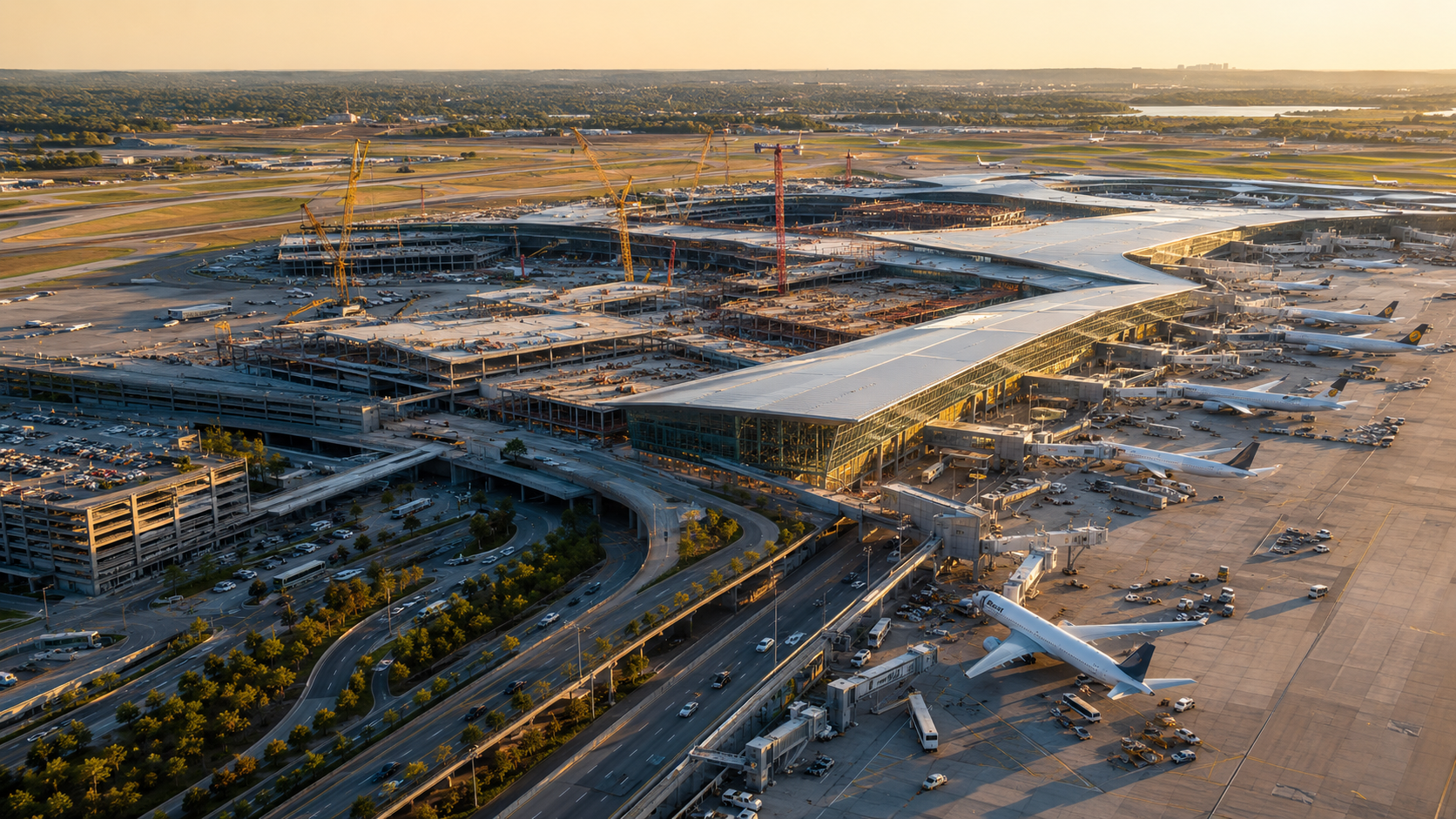
No Single Source of Airport Capital Is Large Enough Anymore
The Airport Infrastructure Grant programme ends in 2026, and the FAA’s entire FY26 AIP release is just $1.1 billion across 382 airports — the airports managing the largest capital programmes, from JFK’s New Terminal One to LaGuardia’s Terminal B, are responding by blending federal grants, airline agreements, and private financing simultaneously rather than sequentially.

Wayfinding Is a Revenue System, Not a Signage Budget
US airport terminal construction will hit a record $28 billion in 2026, with three-quarters of it modernisation rather than new builds — yet wayfinding and commercial planning are still procured separately and measured against contradictory objectives, when the terminals that convert design into revenue treat them as one problem.
A Policy Agenda for India’s Tier-2 Airports
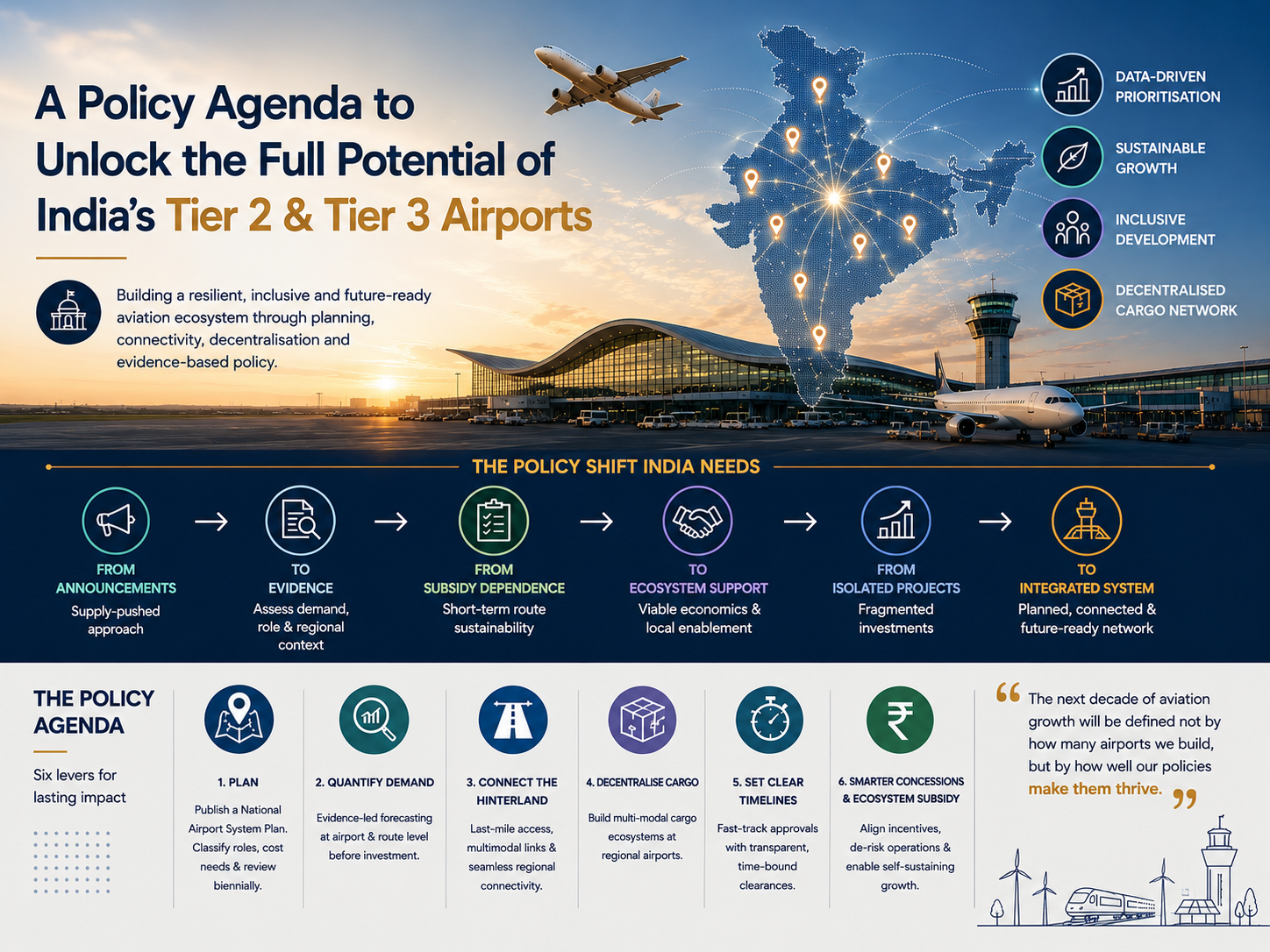
Modified UDAN commits INR 28,840 crore over the next decade to expand India’s Tier-2 airport network — but a CAG audit found 403 of 774 UDAN routes never commenced at all, and just 7% of everything awarded is still flying beyond the subsidy period. Avinia’s six-point agenda addresses what capital alone can’t fix.
It’s the Load Profile, Not the Charger: Designing Airport EV Charging Around Peak Demand
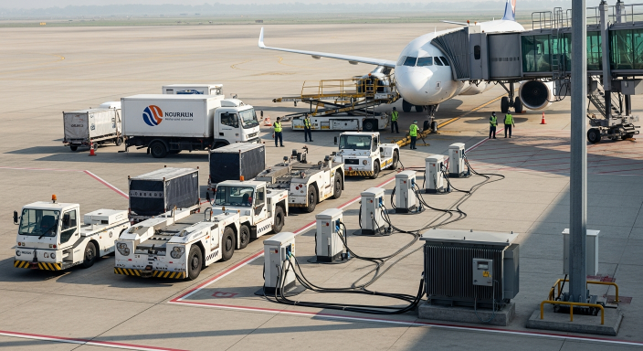
Charging strategy has almost no effect on total energy an airport’s ground fleet consumes — but a decisive effect on peak demand, and 70–90% of a typical electrification project’s cost sits in grid infrastructure, not chargers. Behind-the-meter storage and solar can cut that peak by 20–50%, deferring the transformer upgrades that dominate the bill.

The End of the Parking Deck? Airport Ground-Transport Revenue in the Autonomous Era
Parking and ground transportation still generate 20–35% of non-aeronautical revenue at most large US hubs — a dependency that ride-hailing has already begun to erode and that autonomous vehicles could structurally undermine.
It’s the Load Profile, Not the Charger: Designing Airport EV Charging Around Peak Demand
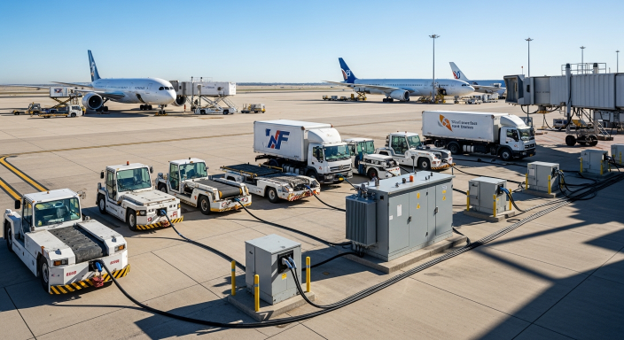
When airports electrify ground support equipment, the number that shapes the grid connection is not total energy — it is the shape of the load. New modelling of 317 US airports finds peak demand at large hubs reaching 10–20 MW, driven entirely by when the fleet charges.
The Operational Mechanics of Bhogapuram’s Overnight Airport Switch
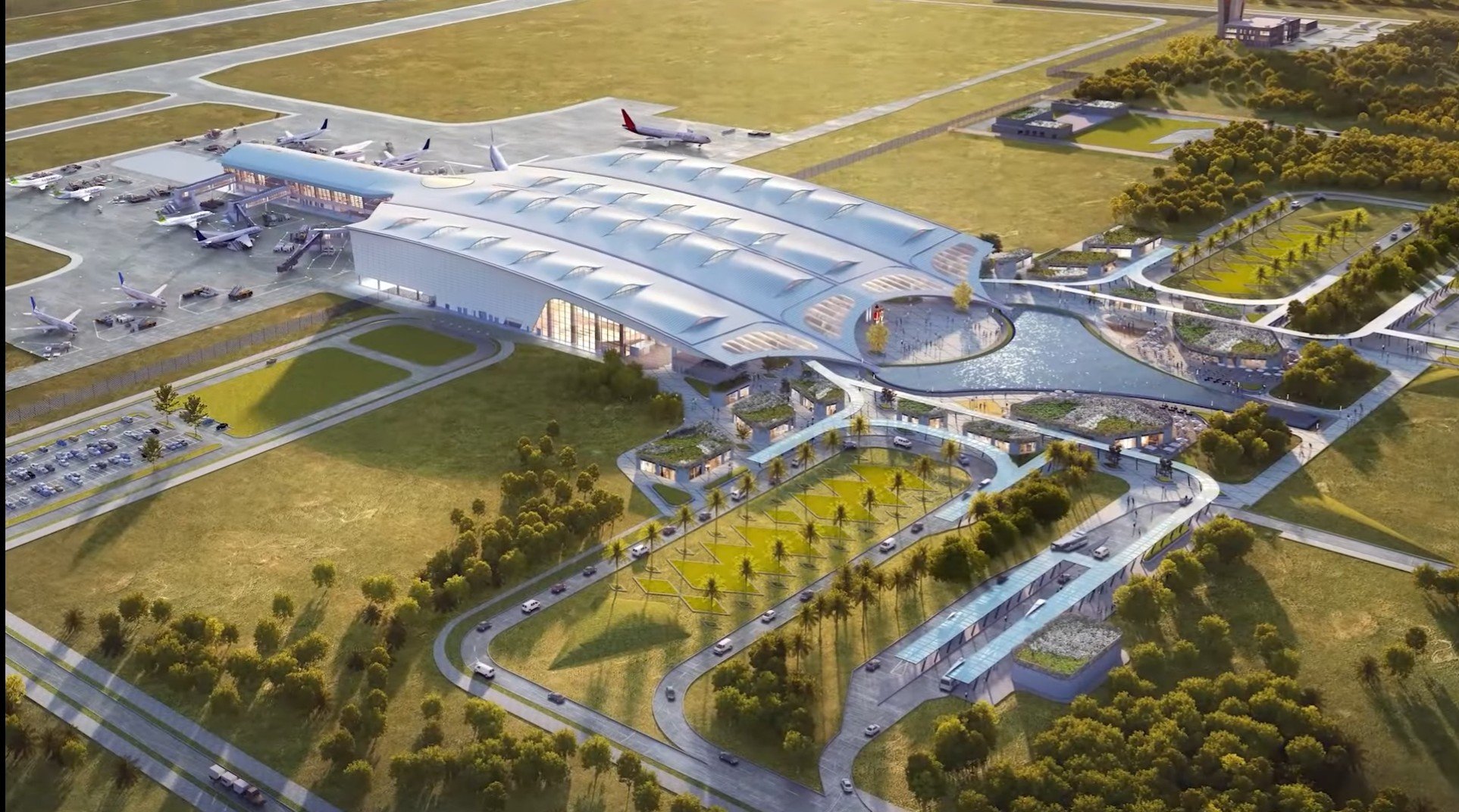
Commercial aviation at Visakhapatnam is expected to transfer to the new Bhogapuram airport from July 2026 — a rare overnight switch that tests every aspect of airport transition planning.
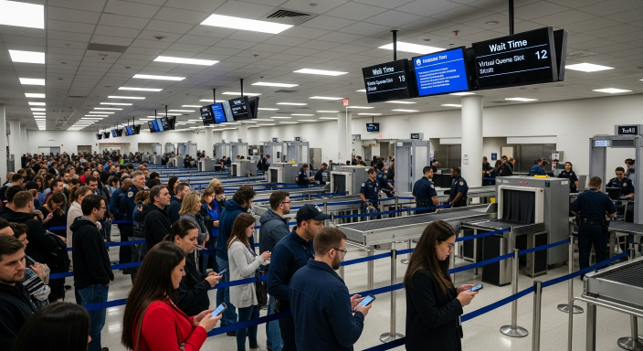
Beyond the Queue: How Virtual Queuing Could Transform Security Checkpoint Demand Management (India)
Virtual queuing systems could decouple passenger arrival from security queue formation — transforming a fixed bottleneck into a managed flow, with measurable gains in dwell time and retail spend.
Beyond the Queue: How Virtual Queuing Could Transform Security Checkpoint Demand Management
The security checkpoint remains aviation’s most persistent friction point — virtual queuing offers airports a demand-management tool that improves the passenger experience without adding lanes.

Unlocking Private Capital: A Practical P3 Roadmap for US Airport Infrastructure
The US operates the world’s largest aviation network yet remains an outlier in airport P3 adoption — a consequence of policy choices, not market dynamics.
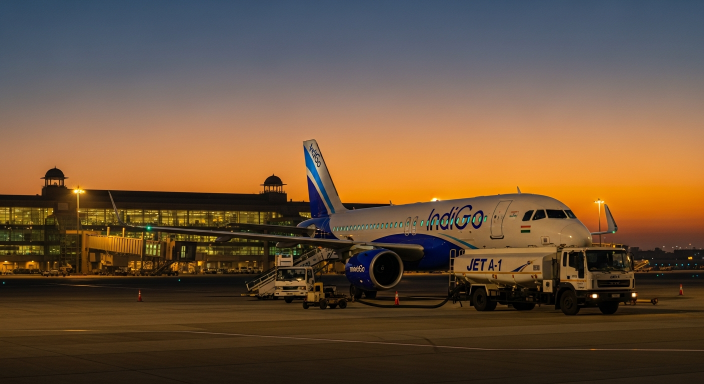
Crude, ATF, and the Indian Air Fare: How the West Asia Shock Is Reshaping Domestic Airline Economics
Crude above $80 and a weakening rupee are squeezing airline margins — this analysis maps the ATF cost transmission chain and its implications for Indian domestic fares.

From Reactive to Predictive: How AI Is Transforming the Airport Operations Control Centre (India)
Airport Operations Control Centres are shifting from reactive coordination to predictive management — AI-driven tools are at the centre of that transition at Indian airports.
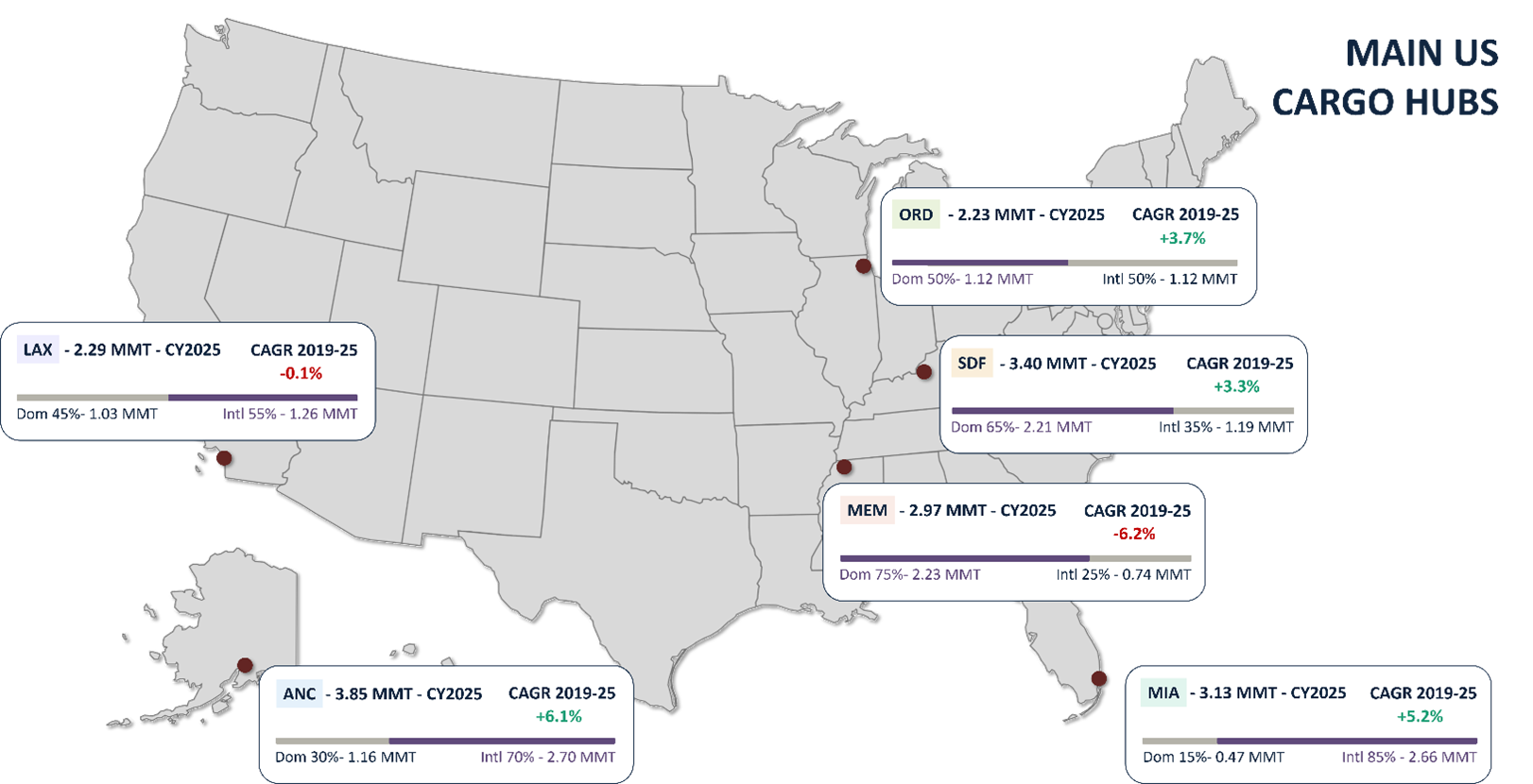
Modernizing Air Cargo Operations at U.S. Airports: Closing the Infrastructure Gap
Air cargo underpins 35% of world trade by value, yet US airport cargo infrastructure remains chronically underfunded — closing the gap requires a strategic rethink of facility investment.

From Reactive to Predictive: How AI Is Transforming the Airport Operations Control Centre
Predictive AI tools are enabling US airports to anticipate disruption before it cascades — transforming the AOCC from a coordination hub into a decision-intelligence centre.

Mumbai’s Dual-Airport Transition: NMI/BOM System
The opening of Navi Mumbai International Airport marks a structural shift in India’s busiest aviation market — one that will reshape airline networks, surface access, and passenger distribution for decades.
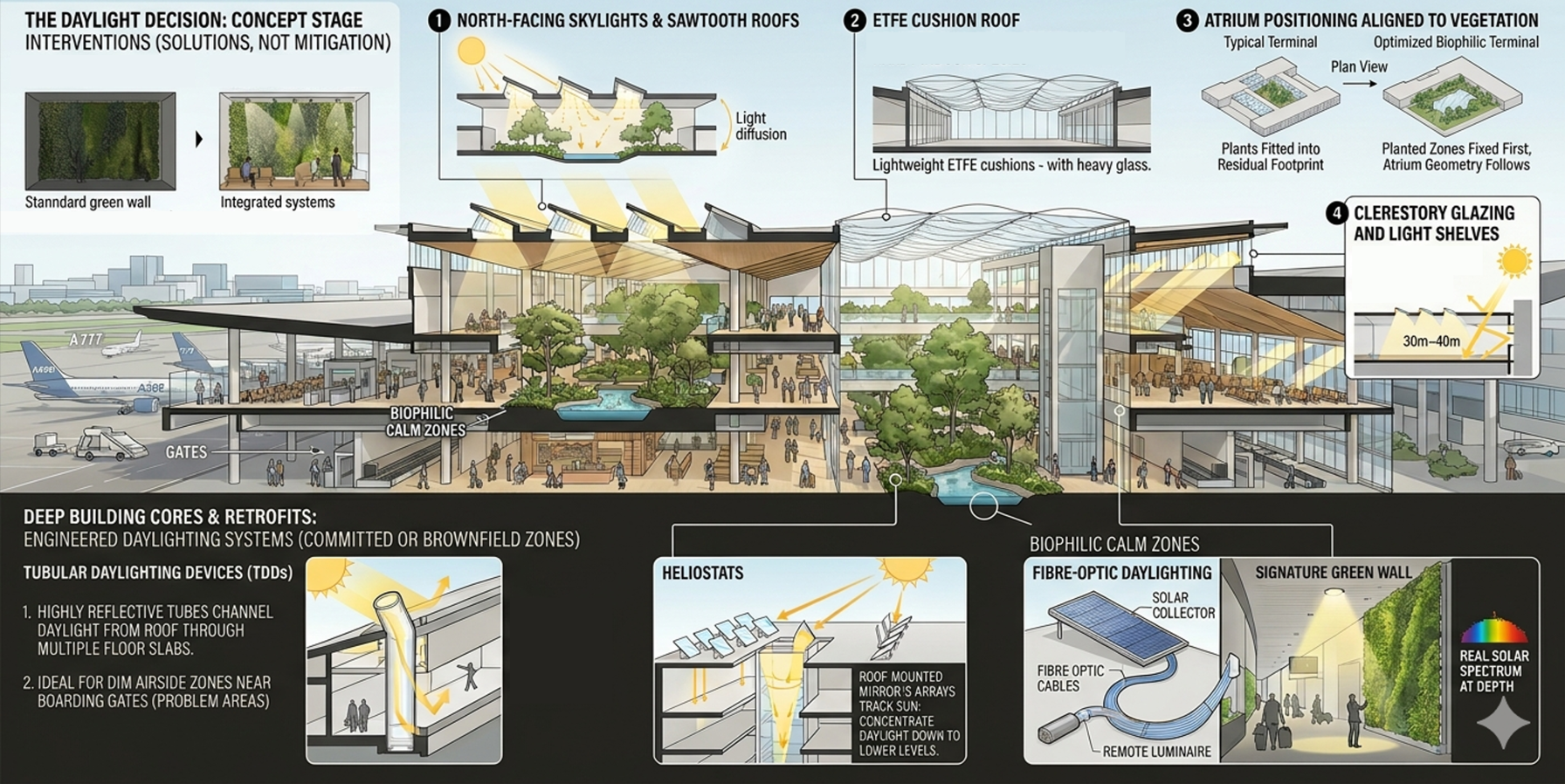
The Discipline Behind the Green Wall: Biophilic Design at Indian Airport Terminals
Biophilic design at Indian terminals has moved from aesthetics to operational discipline — stress, dwell, and spend data now underpin the business case for living infrastructure.

Rewiring the Kerb: Autonomous Ride-Hailing and the Future of Airport Revenue Models
When Waymo scaled to airport service at Phoenix Sky Harbor, it set a precedent the industry has not yet priced in — autonomous ride-hailing is rewriting the economics of the kerb.

Biophilic Design in Airport Terminals: The Operational Case
Biophilic airport terminals reduce perceived wait times, increase retail dwell, and lower cortisol — a practical framework for operators weighing the investment case.
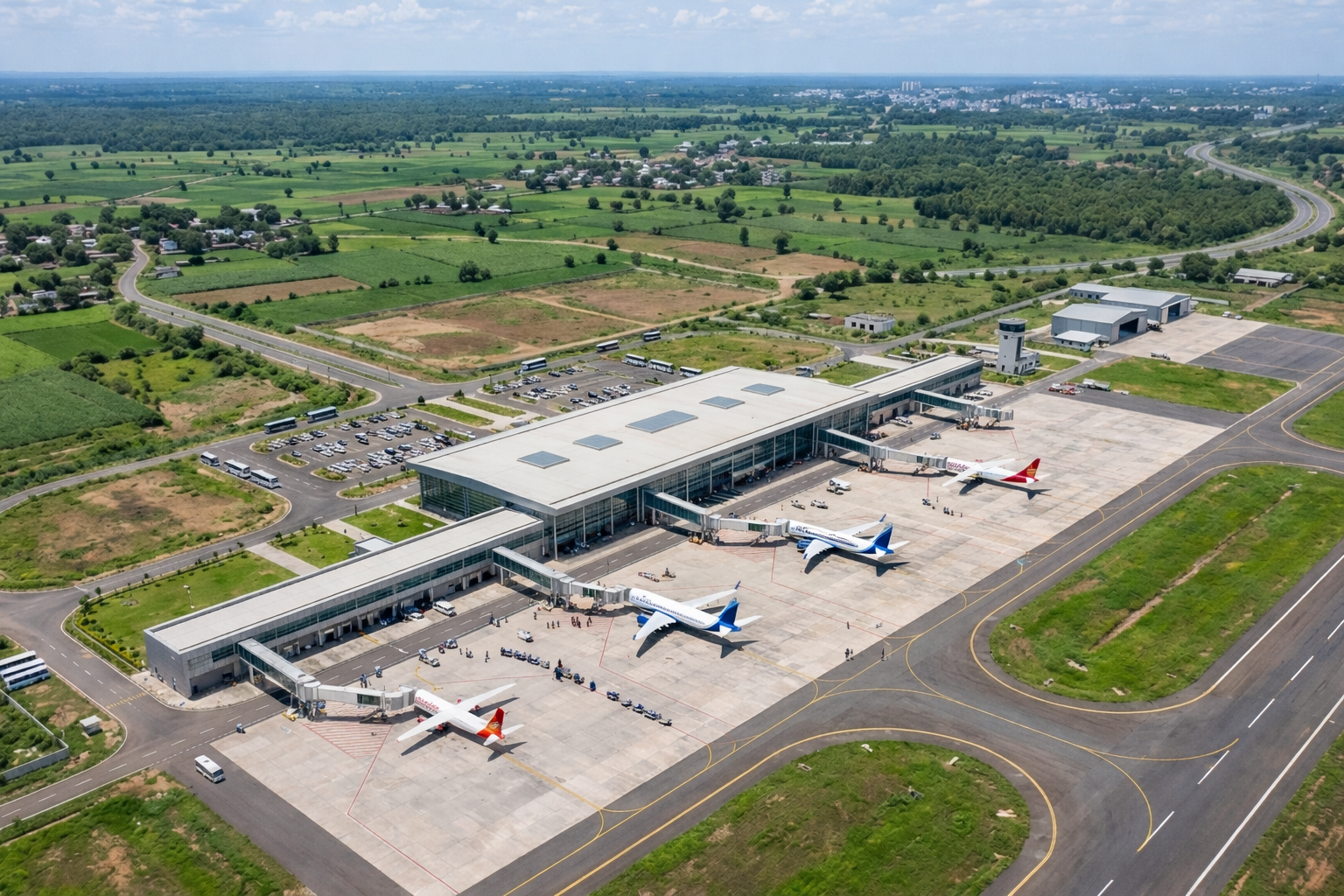
Building Smart: Low-Cost Terminals for Regional Airports
India’s aviation growth is in tier-2 and tier-3 cities — low-cost terminal models offer a capital-efficient path to unlocking regional connectivity.
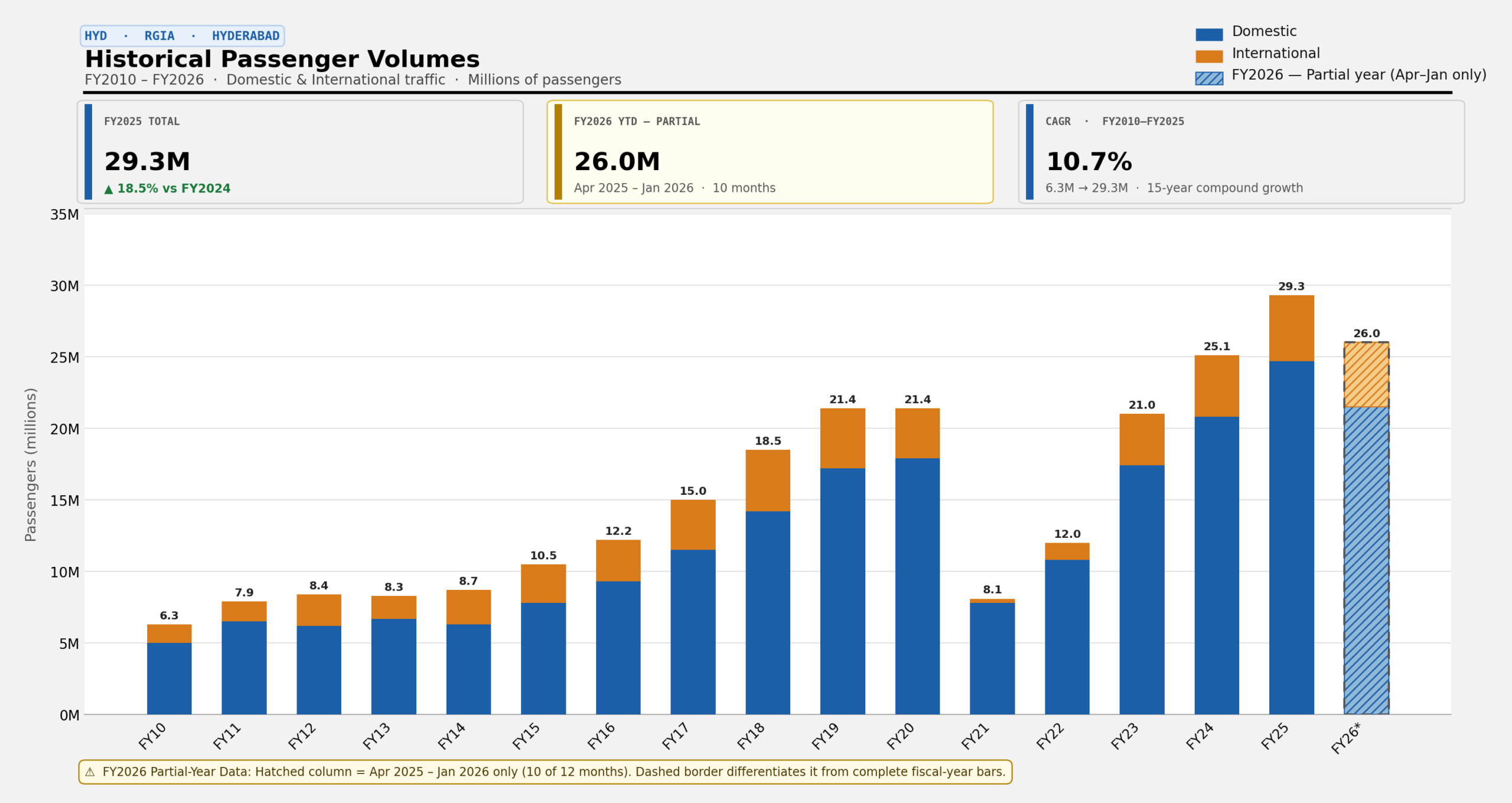
Probabilistic Demand Forecasting for Airport Master Planning: A Hyderabad Case Study
Master plans worth hundreds of millions are built on single-line projections — probabilistic demand modelling offers a more honest framework for Hyderabad Airport’s next planning cycle.
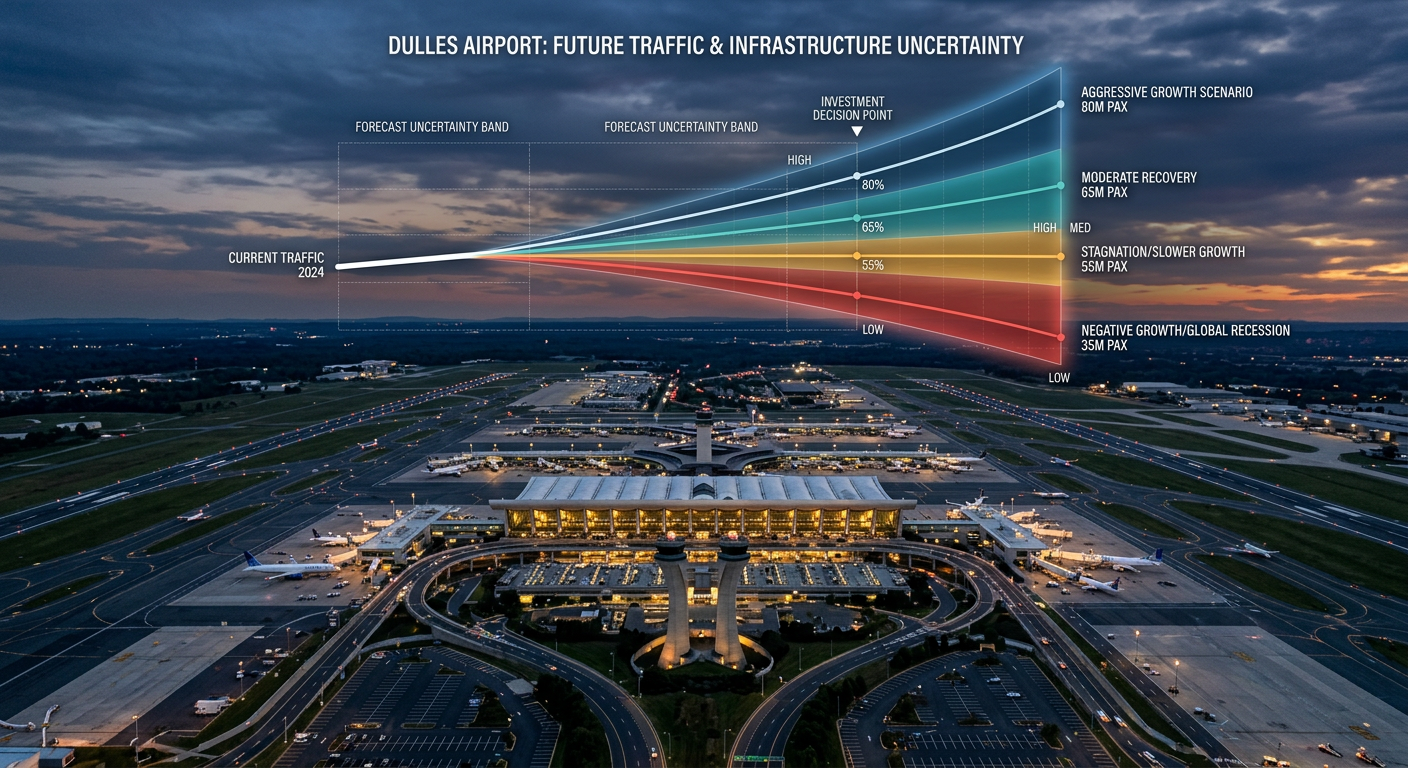
The Single Line Forecast Will Be Wrong. Here’s How to Plan for It – Washington Dulles
Airport traffic forecasting has traditionally been an exercise in false precision — this analysis develops a probabilistic planning frame for Washington Dulles.

India’s First Dual Airport Case Study: Goa’s Dabolim/MOPA System
Goa’s Dabolim/MOPA transition offers India’s first live test of dual-airport demand redistribution — with lessons for every metro planning a second facility.
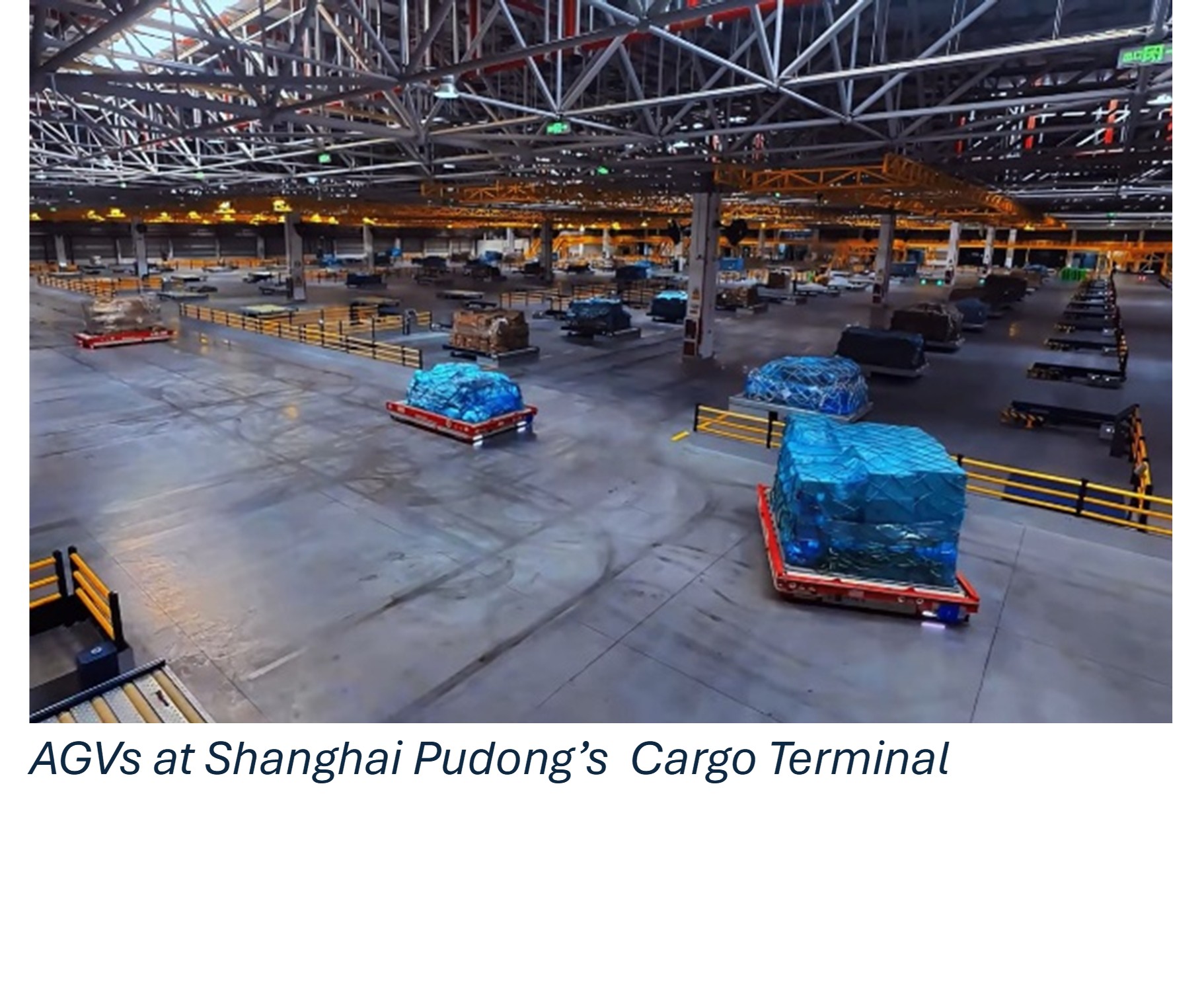
The Smart Cargo Terminal: A Practical Framework for Technology Integration
Technology integration in air cargo facilities follows a three-layer framework — and most US and Indian cargo terminals are still on layer one.

A321XLR vs 757-200: The Next Chapter in Long-Haul Narrow-Body Operations
The A321XLR and the 757-200 share a performance envelope but not an era — this analysis compares the two airframes across the routes that will define their commercial contest.

The A321XLR – Network Catalyst or Widebody Killer?
Airbus positions the A321XLR as a network catalyst — but the widebody case remains strong on the routes that matter most to long-haul carriers.
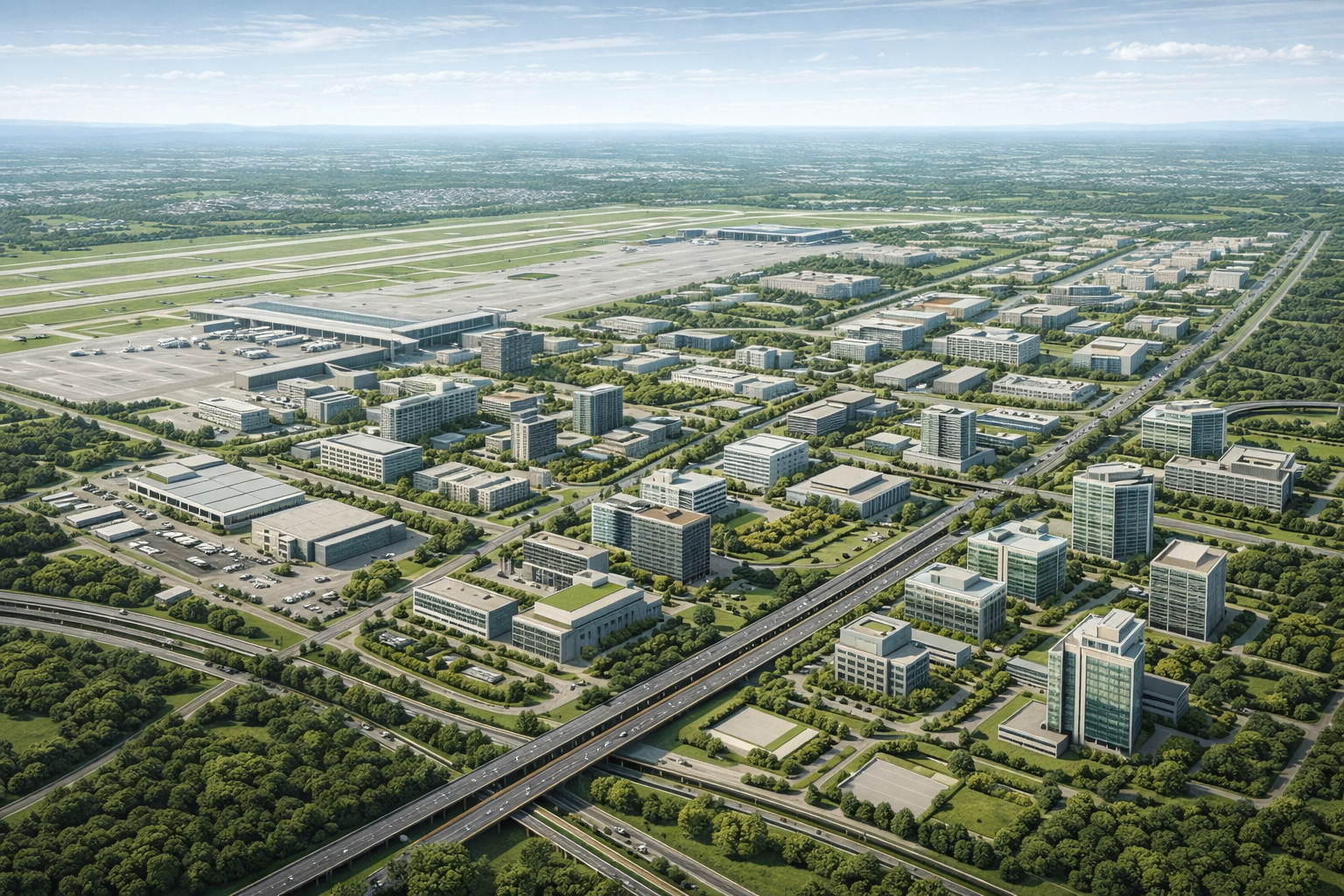
Beyond Airport Real Estate: Building Airport Cities for Speed
Airport cities are no longer a real estate concept — the competitive advantage now lies in how quickly they can be built, not how densely.
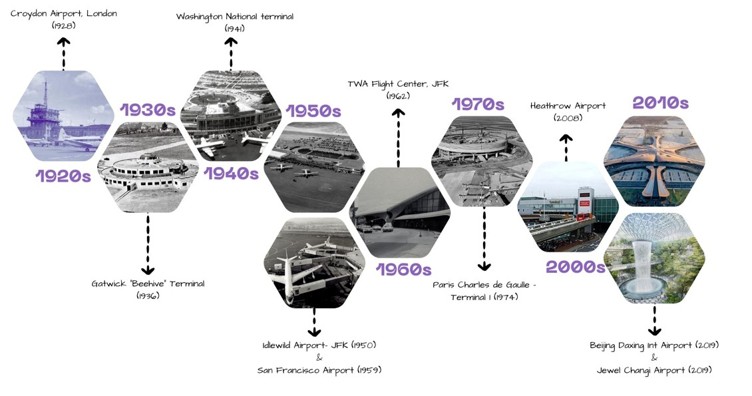
The Evolution of Airport Passenger Terminal Design
From post-war sheds to today’s mega-terminals, passenger terminal design has tracked shifts in airline economics, security doctrine, and traveller expectation.
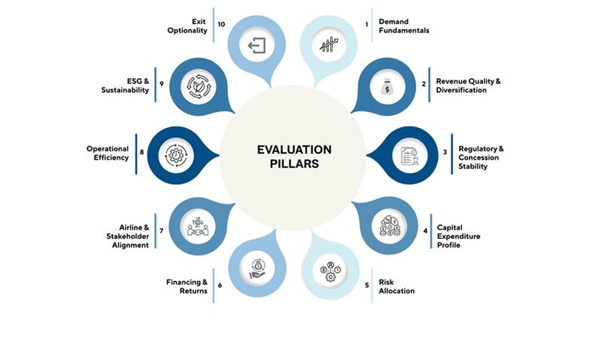
Applying P3 Lens: Revitalizing Washington Dulles International Airport (IAD)
Dulles International faces a capital funding gap that the public balance sheet cannot close — this analysis applies the P3 lens to the airport’s infrastructure refresh programme.

Automation & Robotics in Airports: Technology as the Enabler – not the Replacement
Automation and robotics are advancing rapidly across airport operations — the strategic question is not whether to deploy, but how to sequence investment alongside the workforce.
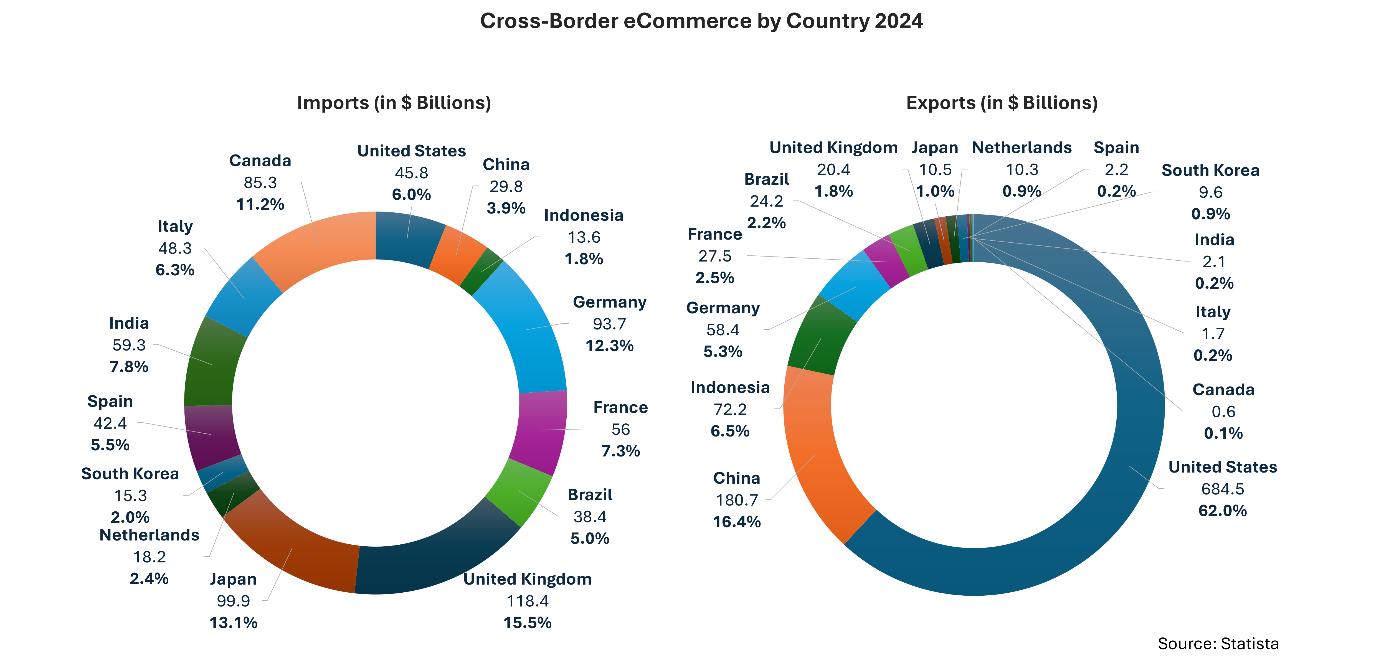
Cross Border Ecommerce Growth: Can Airport Infrastructure Keep Up?
E-commerce growth is outpacing air cargo infrastructure at most major gateways — airports that have not planned for the volume surge are already behind.

When Technology Meets Compassion: Lessons from KitKat and the Future of Autonomous Mobility
A cat struck by a Waymo vehicle became an unlikely test of autonomous mobility’s social licence — a reminder that technology deployment requires more than engineering.

Urban Air Mobility: Challenges and Opportunities Ahead
Urban air mobility faces a convergence problem — vehicles are advancing faster than vertiport infrastructure, airspace integration, and public acceptance.

From Transit to Taste: The Explosive Growth of India’s Airport F&B Sector
Indian airports have become destinations in their own right for food and beverage — this analysis maps the structural drivers behind a sector that now rivals retail in terminal revenue.

How Infrastructure Planning is Evolving in the Age of Resilience
Infrastructure planning is adapting to a world of compounding shocks — climate stress, supply chain fragility, and demand volatility are reshaping how airports model capacity.

Predictive Analytics for Airport Capacity Planning
Predictive analytics is moving from back-office reporting to real-time capacity management — with direct implications for how airports plan stand allocation and terminal throughput.

Top 10 U.S. Domestic Airport Pairs
The ten busiest US domestic city pairs account for a disproportionate share of seat capacity — this data brief maps the routes that anchor the national aviation network.

Air Cargo Growth: Deep Dive into the India Market
India’s air cargo market is growing at twice the pace of passenger traffic — infrastructure investment has not kept pace, and the gap is now visible in dwell times and congestion data.

Sustainable Aviation Fuel: How Prepared Are We to Meet Industry Targets?
SAF targets are ambitious — this analysis assesses production capacity, cost curves, and airline offtake commitments against the 2030 and 2050 milestones.

India Passenger Traffic Market Deep Dive
A data-led review of Indian domestic passenger traffic trends, airport-level growth leaders, and the structural demand drivers shaping the next planning cycle.

A Strategic Look at LAT Aerospace’s High-Stakes Takeoff
LAT Aerospace is positioning itself as a disruptor in the Indian aviation manufacturing market — an analysis of its technology claims, capital requirements, and competitive timing.
Receive the latest issue in your inbox
Monthly perspectives on airport planning, market intelligence, mobility, and sustainability.
Featured September 2026
The Future of Airport Parking Revenue
Car parking makes up 43.2% of North American airports’ non-aeronautical revenue, and Waymo-level robotaxi pricing could eventually undercut a multi-day parking stay by half—but with driverless service live at just four U.S. airports and access still airport-controlled, Avinia’s analysis puts the real disruption window at 2030–2040, not next year.
When One Airline Dominates: What U.S. Fortress Hubs Mean for Fares
Southwest carries 97% of passengers through Dallas Love Field and Delta over 70% at Atlanta, yet DOT fare data shows dominance alone doesn’t set the price—Southwest’s fortress hubs run at or below the national average while every merger-inherited legacy hub on this list carries at least a 10% fare premium.
Featured Insights from Avinia Labs
What Eleven Years of Monthly City-Pair Data Say About UDAN and Everything Else
Eleven years of monthly city-pair data, set against the 679-route RCS-UDAN list, show India’s domestic network splitting into two tracks — a “Legacy” network growing at a 6.4% CAGR versus UDAN subsidy-driven one that still trails it ninefold on passengers per route—with regional successes like Darbhanga and Jharsuguda sitting next to outright failures like Pakyong.
The Commercial Terminal — Legibility, Dwell and Non-Aero Yield in India
Airport tariff filings across eight major Indian airports, restated on a per-passenger basis, show non-aeronautical income splitting two ways — duty free explains as little as 6.5% of it, while the terminal’s ordinary commercial estate and land/landside revenue do the rest—the airports earning less aren’t earning less from passengers, they’re earning it from somewhere else entirely.
No Single Source of Airport Capital Is Large Enough Anymore
The Airport Infrastructure Grant programme ends in 2026, and the FAA’s entire FY26 AIP release is just $1.1 billion across 382 airports — the airports managing the largest capital programmes, from JFK’s New Terminal One to LaGuardia’s Terminal B, are responding by blending federal grants, airline agreements, and private financing simultaneously rather than sequentially.
Wayfinding Is a Revenue System, Not a Signage Budget
US airport terminal construction will hit a record $28 billion in 2026, with three-quarters of it modernisation rather than new builds — yet wayfinding and commercial planning are still procured separately and measured against contradictory objectives, when the terminals that convert design into revenue treat them as one problem.
A Policy Agenda for India’s Tier-2 Airports
Modified UDAN commits INR 28,840 crore over the next decade to expand India’s Tier-2 airport network — but a CAG audit found 403 of 774 UDAN routes never commenced at all, and just 7% of everything awarded is still flying beyond the subsidy period. Avinia’s six-point agenda addresses what capital alone can’t fix.
It’s the Load Profile, Not the Charger: Designing Airport EV Charging Around Peak Demand
Charging strategy has almost no effect on total energy an airport’s ground fleet consumes — but a decisive effect on peak demand, and 70–90% of a typical electrification project’s cost sits in grid infrastructure, not chargers. Behind-the-meter storage and solar can cut that peak by 20–50%, deferring the transformer upgrades that dominate the bill.
The End of the Parking Deck? Airport Ground-Transport Revenue in the Autonomous Era
Parking and ground transportation still generate 20–35% of non-aeronautical revenue at most large US hubs — a dependency that ride-hailing has already begun to erode and that autonomous vehicles could structurally undermine.
It’s the Load Profile, Not the Charger: Designing Airport EV Charging Around Peak Demand
When airports electrify ground support equipment, the number that shapes the grid connection is not total energy — it is the shape of the load. New modelling of 317 US airports finds peak demand at large hubs reaching 10–20 MW, driven entirely by when the fleet charges.
The Operational Mechanics of Bhogapuram’s Overnight Airport Switch
Commercial aviation at Visakhapatnam is expected to transfer to the new Bhogapuram airport from July 2026 — a rare overnight switch that tests every aspect of airport transition planning.
Beyond the Queue: How Virtual Queuing Could Transform Security Checkpoint Demand Management (India)
Virtual queuing systems could decouple passenger arrival from security queue formation — transforming a fixed bottleneck into a managed flow, with measurable gains in dwell time and retail spend.
Beyond the Queue: How Virtual Queuing Could Transform Security Checkpoint Demand Management
The security checkpoint remains aviation’s most persistent friction point — virtual queuing offers airports a demand-management tool that improves the passenger experience without adding lanes.
Unlocking Private Capital: A Practical P3 Roadmap for US Airport Infrastructure
The US operates the world’s largest aviation network yet remains an outlier in airport P3 adoption — a consequence of policy choices, not market dynamics.
Crude, ATF, and the Indian Air Fare: How the West Asia Shock Is Reshaping Domestic Airline Economics
Crude above $80 and a weakening rupee are squeezing airline margins — this analysis maps the ATF cost transmission chain and its implications for Indian domestic fares.
From Reactive to Predictive: How AI Is Transforming the Airport Operations Control Centre (India)
Airport Operations Control Centres are shifting from reactive coordination to predictive management — AI-driven tools are at the centre of that transition at Indian airports.
Modernizing Air Cargo Operations at U.S. Airports: Closing the Infrastructure Gap
Air cargo underpins 35% of world trade by value, yet US airport cargo infrastructure remains chronically underfunded — closing the gap requires a strategic rethink of facility investment.
From Reactive to Predictive: How AI Is Transforming the Airport Operations Control Centre
Predictive AI tools are enabling US airports to anticipate disruption before it cascades — transforming the AOCC from a coordination hub into a decision-intelligence centre.
Mumbai’s Dual-Airport Transition: NMI/BOM System
The opening of Navi Mumbai International Airport marks a structural shift in India’s busiest aviation market — one that will reshape airline networks, surface access, and passenger distribution for decades.
The Discipline Behind the Green Wall: Biophilic Design at Indian Airport Terminals
Biophilic design at Indian terminals has moved from aesthetics to operational discipline — stress, dwell, and spend data now underpin the business case for living infrastructure.
Rewiring the Kerb: Autonomous Ride-Hailing and the Future of Airport Revenue Models
When Waymo scaled to airport service at Phoenix Sky Harbor, it set a precedent the industry has not yet priced in — autonomous ride-hailing is rewriting the economics of the kerb.
Biophilic Design in Airport Terminals: The Operational Case
Biophilic airport terminals reduce perceived wait times, increase retail dwell, and lower cortisol — a practical framework for operators weighing the investment case.
Building Smart: Low-Cost Terminals for Regional Airports
India’s aviation growth is in tier-2 and tier-3 cities — low-cost terminal models offer a capital-efficient path to unlocking regional connectivity.
Probabilistic Demand Forecasting for Airport Master Planning: A Hyderabad Case Study
Master plans worth hundreds of millions are built on single-line projections — probabilistic demand modelling offers a more honest framework for Hyderabad Airport’s next planning cycle.
The Single Line Forecast Will Be Wrong. Here’s How to Plan for It – Washington Dulles
Airport traffic forecasting has traditionally been an exercise in false precision — this analysis develops a probabilistic planning frame for Washington Dulles.
India’s First Dual Airport Case Study: Goa’s Dabolim/MOPA System
Goa’s Dabolim/MOPA transition offers India’s first live test of dual-airport demand redistribution — with lessons for every metro planning a second facility.
The Smart Cargo Terminal: A Practical Framework for Technology Integration
Technology integration in air cargo facilities follows a three-layer framework — and most US and Indian cargo terminals are still on layer one.
A321XLR vs 757-200: The Next Chapter in Long-Haul Narrow-Body Operations
The A321XLR and the 757-200 share a performance envelope but not an era — this analysis compares the two airframes across the routes that will define their commercial contest.
The A321XLR – Network Catalyst or Widebody Killer?
Airbus positions the A321XLR as a network catalyst — but the widebody case remains strong on the routes that matter most to long-haul carriers.
Beyond Airport Real Estate: Building Airport Cities for Speed
Airport cities are no longer a real estate concept — the competitive advantage now lies in how quickly they can be built, not how densely.
The Evolution of Airport Passenger Terminal Design
From post-war sheds to today’s mega-terminals, passenger terminal design has tracked shifts in airline economics, security doctrine, and traveller expectation.
Applying P3 Lens: Revitalizing Washington Dulles International Airport (IAD)
Dulles International faces a capital funding gap that the public balance sheet cannot close — this analysis applies the P3 lens to the airport’s infrastructure refresh programme.
Automation & Robotics in Airports: Technology as the Enabler – not the Replacement
Automation and robotics are advancing rapidly across airport operations — the strategic question is not whether to deploy, but how to sequence investment alongside the workforce.
Cross Border Ecommerce Growth: Can Airport Infrastructure Keep Up?
E-commerce growth is outpacing air cargo infrastructure at most major gateways — airports that have not planned for the volume surge are already behind.
When Technology Meets Compassion: Lessons from KitKat and the Future of Autonomous Mobility
A cat struck by a Waymo vehicle became an unlikely test of autonomous mobility’s social licence — a reminder that technology deployment requires more than engineering.
Urban Air Mobility: Challenges and Opportunities Ahead
Urban air mobility faces a convergence problem — vehicles are advancing faster than vertiport infrastructure, airspace integration, and public acceptance.
From Transit to Taste: The Explosive Growth of India’s Airport F&B Sector
Indian airports have become destinations in their own right for food and beverage — this analysis maps the structural drivers behind a sector that now rivals retail in terminal revenue.
How Infrastructure Planning is Evolving in the Age of Resilience
Infrastructure planning is adapting to a world of compounding shocks — climate stress, supply chain fragility, and demand volatility are reshaping how airports model capacity.
Predictive Analytics for Airport Capacity Planning
Predictive analytics is moving from back-office reporting to real-time capacity management — with direct implications for how airports plan stand allocation and terminal throughput.
Top 10 U.S. Domestic Airport Pairs
The ten busiest US domestic city pairs account for a disproportionate share of seat capacity — this data brief maps the routes that anchor the national aviation network.
Air Cargo Growth: Deep Dive into the India Market
India’s air cargo market is growing at twice the pace of passenger traffic — infrastructure investment has not kept pace, and the gap is now visible in dwell times and congestion data.
Sustainable Aviation Fuel: How Prepared Are We to Meet Industry Targets?
SAF targets are ambitious — this analysis assesses production capacity, cost curves, and airline offtake commitments against the 2030 and 2050 milestones.
India Passenger Traffic Market Deep Dive
A data-led review of Indian domestic passenger traffic trends, airport-level growth leaders, and the structural demand drivers shaping the next planning cycle.
A Strategic Look at LAT Aerospace’s High-Stakes Takeoff
LAT Aerospace is positioning itself as a disruptor in the Indian aviation manufacturing market — an analysis of its technology claims, capital requirements, and competitive timing.
Receive the latest issue in your inbox
Monthly perspectives on airport planning, market intelligence, mobility, and sustainability.
Featured September 2026
The Future of Airport Parking Revenue
Car parking makes up 43.2% of North American airports’ non-aeronautical revenue, and Waymo-level robotaxi pricing could eventually undercut a multi-day parking stay by half—but with driverless service live at just four U.S. airports and access still airport-controlled, Avinia’s analysis puts the real disruption window at 2030–2040, not next year.
When One Airline Dominates: What U.S. Fortress Hubs Mean for Fares
Southwest carries 97% of passengers through Dallas Love Field and Delta over 70% at Atlanta, yet DOT fare data shows dominance alone doesn’t set the price—Southwest’s fortress hubs run at or below the national average while every merger-inherited legacy hub on this list carries at least a 10% fare premium.
Featured Insights from Avinia Labs
What Eleven Years of Monthly City-Pair Data Say About UDAN — and Everything Else
Eleven years of monthly city-pair data, set against the 679-route RCS-UDAN list, show India’s domestic network splitting into two tracks — a “Legacy” network growing at a 6.4% CAGR versus UDAN subsidy-driven one that still trails it ninefold on passengers per route—with regional successes like Darbhanga and Jharsuguda sitting next to outright failures like Pakyong.
The Commercial Terminal — Legibility, Dwell and Non-Aero Yield in India
Airport tariff filings across eight major Indian airports, restated on a per-passenger basis, show non-aeronautical income splitting two ways — duty free explains as little as 6.5% of it, while the terminal’s ordinary commercial estate and land/landside revenue do the rest—the airports earning less aren’t earning less from passengers, they’re earning it from somewhere else entirely.
No Single Source of Airport Capital Is Large Enough Anymore
The Airport Infrastructure Grant programme ends in 2026, and the FAA’s entire FY26 AIP release is just $1.1 billion across 382 airports — the airports managing the largest capital programmes, from JFK’s New Terminal One to LaGuardia’s Terminal B, are responding by blending federal grants, airline agreements, and private financing simultaneously rather than sequentially.
Wayfinding Is a Revenue System, Not a Signage Budget
US airport terminal construction will hit a record $28 billion in 2026, with three-quarters of it modernisation rather than new builds — yet wayfinding and commercial planning are still procured separately and measured against contradictory objectives, when the terminals that convert design into revenue treat them as one problem.
A Policy Agenda for India’s Tier-2 Airports
Modified UDAN commits INR 28,840 crore over the next decade to expand India’s Tier-2 airport network — but a CAG audit found 403 of 774 UDAN routes never commenced at all, and just 7% of everything awarded is still flying beyond the subsidy period. Avinia’s six-point agenda addresses what capital alone can’t fix.
It’s the Load Profile, Not the Charger: Designing Airport EV Charging Around Peak Demand
Charging strategy has almost no effect on total energy an airport’s ground fleet consumes — but a decisive effect on peak demand, and 70–90% of a typical electrification project’s cost sits in grid infrastructure, not chargers. Behind-the-meter storage and solar can cut that peak by 20–50%, deferring the transformer upgrades that dominate the bill.
The End of the Parking Deck? Airport Ground-Transport Revenue in the Autonomous Era
Parking and ground transportation still generate 20–35% of non-aeronautical revenue at most large US hubs — a dependency that ride-hailing has already begun to erode and that autonomous vehicles could structurally undermine.
It’s the Load Profile, Not the Charger: Designing Airport EV Charging Around Peak Demand
When airports electrify ground support equipment, the number that shapes the grid connection is not total energy — it is the shape of the load. New modelling of 317 US airports finds peak demand at large hubs reaching 10–20 MW, driven entirely by when the fleet charges.
The Operational Mechanics of Bhogapuram’s Overnight Airport Switch
Commercial aviation at Visakhapatnam is expected to transfer to the new Bhogapuram airport from July 2026 — a rare overnight switch that tests every aspect of airport transition planning.
Beyond the Queue: How Virtual Queuing Could Transform Security Checkpoint Demand Management (India)
Virtual queuing systems could decouple passenger arrival from security queue formation — transforming a fixed bottleneck into a managed flow, with measurable gains in dwell time and retail spend.
Beyond the Queue: How Virtual Queuing Could Transform Security Checkpoint Demand Management
The security checkpoint remains aviation’s most persistent friction point — virtual queuing offers airports a demand-management tool that improves the passenger experience without adding lanes.
Unlocking Private Capital: A Practical P3 Roadmap for US Airport Infrastructure
The US operates the world’s largest aviation network yet remains an outlier in airport P3 adoption — a consequence of policy choices, not market dynamics.
Crude, ATF, and the Indian Air Fare: How the West Asia Shock Is Reshaping Domestic Airline Economics
Crude above $80 and a weakening rupee are squeezing airline margins — this analysis maps the ATF cost transmission chain and its implications for Indian domestic fares.
From Reactive to Predictive: How AI Is Transforming the Airport Operations Control Centre (India)
Airport Operations Control Centres are shifting from reactive coordination to predictive management — AI-driven tools are at the centre of that transition at Indian airports.
Modernizing Air Cargo Operations at U.S. Airports: Closing the Infrastructure Gap
Air cargo underpins 35% of world trade by value, yet US airport cargo infrastructure remains chronically underfunded — closing the gap requires a strategic rethink of facility investment.
From Reactive to Predictive: How AI Is Transforming the Airport Operations Control Centre
Predictive AI tools are enabling US airports to anticipate disruption before it cascades — transforming the AOCC from a coordination hub into a decision-intelligence centre.
Mumbai’s Dual-Airport Transition: NMI/BOM System
The opening of Navi Mumbai International Airport marks a structural shift in India’s busiest aviation market — one that will reshape airline networks, surface access, and passenger distribution for decades.
The Discipline Behind the Green Wall: Biophilic Design at Indian Airport Terminals
Biophilic design at Indian terminals has moved from aesthetics to operational discipline — stress, dwell, and spend data now underpin the business case for living infrastructure.
Rewiring the Kerb: Autonomous Ride-Hailing and the Future of Airport Revenue Models
When Waymo scaled to airport service at Phoenix Sky Harbor, it set a precedent the industry has not yet priced in — autonomous ride-hailing is rewriting the economics of the kerb.
Biophilic Design in Airport Terminals: The Operational Case
Biophilic airport terminals reduce perceived wait times, increase retail dwell, and lower cortisol — a practical framework for operators weighing the investment case.
Building Smart: Low-Cost Terminals for Regional Airports
India’s aviation growth is in tier-2 and tier-3 cities — low-cost terminal models offer a capital-efficient path to unlocking regional connectivity.
Probabilistic Demand Forecasting for Airport Master Planning: A Hyderabad Case Study
Master plans worth hundreds of millions are built on single-line projections — probabilistic demand modelling offers a more honest framework for Hyderabad Airport’s next planning cycle.
The Single Line Forecast Will Be Wrong. Here’s How to Plan for It – Washington Dulles
Airport traffic forecasting has traditionally been an exercise in false precision — this analysis develops a probabilistic planning frame for Washington Dulles.
India’s First Dual Airport Case Study: Goa’s Dabolim/MOPA System
Goa’s Dabolim/MOPA transition offers India’s first live test of dual-airport demand redistribution — with lessons for every metro planning a second facility.
The Smart Cargo Terminal: A Practical Framework for Technology Integration
Technology integration in air cargo facilities follows a three-layer framework — and most US and Indian cargo terminals are still on layer one.
A321XLR vs 757-200: The Next Chapter in Long-Haul Narrow-Body Operations
The A321XLR and the 757-200 share a performance envelope but not an era — this analysis compares the two airframes across the routes that will define their commercial contest.
The A321XLR – Network Catalyst or Widebody Killer?
Airbus positions the A321XLR as a network catalyst — but the widebody case remains strong on the routes that matter most to long-haul carriers.
Beyond Airport Real Estate: Building Airport Cities for Speed
Airport cities are no longer a real estate concept — the competitive advantage now lies in how quickly they can be built, not how densely.
The Evolution of Airport Passenger Terminal Design
From post-war sheds to today’s mega-terminals, passenger terminal design has tracked shifts in airline economics, security doctrine, and traveller expectation.
Applying P3 Lens: Revitalizing Washington Dulles International Airport (IAD)
Dulles International faces a capital funding gap that the public balance sheet cannot close — this analysis applies the P3 lens to the airport’s infrastructure refresh programme.
Automation & Robotics in Airports: Technology as the Enabler – not the Replacement
Automation and robotics are advancing rapidly across airport operations — the strategic question is not whether to deploy, but how to sequence investment alongside the workforce.
Cross Border Ecommerce Growth: Can Airport Infrastructure Keep Up?
E-commerce growth is outpacing air cargo infrastructure at most major gateways — airports that have not planned for the volume surge are already behind.
When Technology Meets Compassion: Lessons from KitKat and the Future of Autonomous Mobility
A cat struck by a Waymo vehicle became an unlikely test of autonomous mobility’s social licence — a reminder that technology deployment requires more than engineering.
Urban Air Mobility: Challenges and Opportunities Ahead
Urban air mobility faces a convergence problem — vehicles are advancing faster than vertiport infrastructure, airspace integration, and public acceptance.
From Transit to Taste: The Explosive Growth of India’s Airport F&B Sector
Indian airports have become destinations in their own right for food and beverage — this analysis maps the structural drivers behind a sector that now rivals retail in terminal revenue.
How Infrastructure Planning is Evolving in the Age of Resilience
Infrastructure planning is adapting to a world of compounding shocks — climate stress, supply chain fragility, and demand volatility are reshaping how airports model capacity.
Predictive Analytics for Airport Capacity Planning
Predictive analytics is moving from back-office reporting to real-time capacity management — with direct implications for how airports plan stand allocation and terminal throughput.
Top 10 U.S. Domestic Airport Pairs
The ten busiest US domestic city pairs account for a disproportionate share of seat capacity — this data brief maps the routes that anchor the national aviation network.
Air Cargo Growth: Deep Dive into the India Market
India’s air cargo market is growing at twice the pace of passenger traffic — infrastructure investment has not kept pace, and the gap is now visible in dwell times and congestion data.
Sustainable Aviation Fuel: How Prepared Are We to Meet Industry Targets?
SAF targets are ambitious — this analysis assesses production capacity, cost curves, and airline offtake commitments against the 2030 and 2050 milestones.
India Passenger Traffic Market Deep Dive
A data-led review of Indian domestic passenger traffic trends, airport-level growth leaders, and the structural demand drivers shaping the next planning cycle.
A Strategic Look at LAT Aerospace’s High-Stakes Takeoff
LAT Aerospace is positioning itself as a disruptor in the Indian aviation manufacturing market — an analysis of its technology claims, capital requirements, and competitive timing.
Receive the latest issue in your inbox
Monthly perspectives on airport planning, market intelligence, mobility, and sustainability.