The Global Air Cargo sector currently navigates an environment where the challenges facing the industry are different from those of the past. On one hand, there are factors such as geopolitical tensions, trade policy shifts, and trade lane disruptions; while on the other, there are challenges arising from capacity constraints, expensive labour and sustainability commitments.
For decades, the answer to cargo growth was simple: build more warehouses. When volumes rose, we expanded footprint and adjusted layout. With the rapid growth of traffic and the associated aeronautical infrastructure needs of airports, physical space constraints are plaguing all the major airports. Cargo facilities that require prime real estate at an airport, with airside access are impacted by this constraint too. Technology provides a solution, enabling optimization of the cargo capacity. But it is easier said than done.
The question facing cargo operators and handlers today is not whether to transform or not. It is about how to do it without falling into the trap of fragmented, reactive technology adoption that creates new inefficiencies rather than eliminating old ones. In this article, we propose a framework to facilitate decision-making on technology integration for cargo terminals to function as an intelligent and ecosystem-connected facilities.
The Core Strategic Shift
The path to greater throughput is no longer paved with more square footage. It is built on smarter use of what already exists.
Technology integration, when executed along with architectural design, allows stakeholders to extract significantly more output from current or future planned facilities. The evidence from airports that have made this transition demonstrates measurable gains in throughput, dwell time reduction, labour productivity, and service reliability.
When we think about cargo facilities planning, technology solutions are often a layer on top, unaccounted for in the design stage resulting in sub-optimal outcomes. An integrated solution would mean drafting out a plan for technology adoption at different phases and working backwards to the design of the physical space, incorporating the requirements of future technology. In other words, the vision for a smart cargo terminal must dictate the design of the terminal, and it must be planned thoroughly.
A Three-Layer Framework for Technology Integration in Air Cargo Facilities
Technology integration is most effective when approached as a structured maturity pathway rather than a collection of isolated pilots. Hence, a three-layered approach, where each successive capability builds on the foundation established by the one before it. Each layer has standalone value and its potential is enhanced with combination of other layers. Decision makers can hence use the framework to craft a practical path of realizing the vision of a smart cargo terminal.
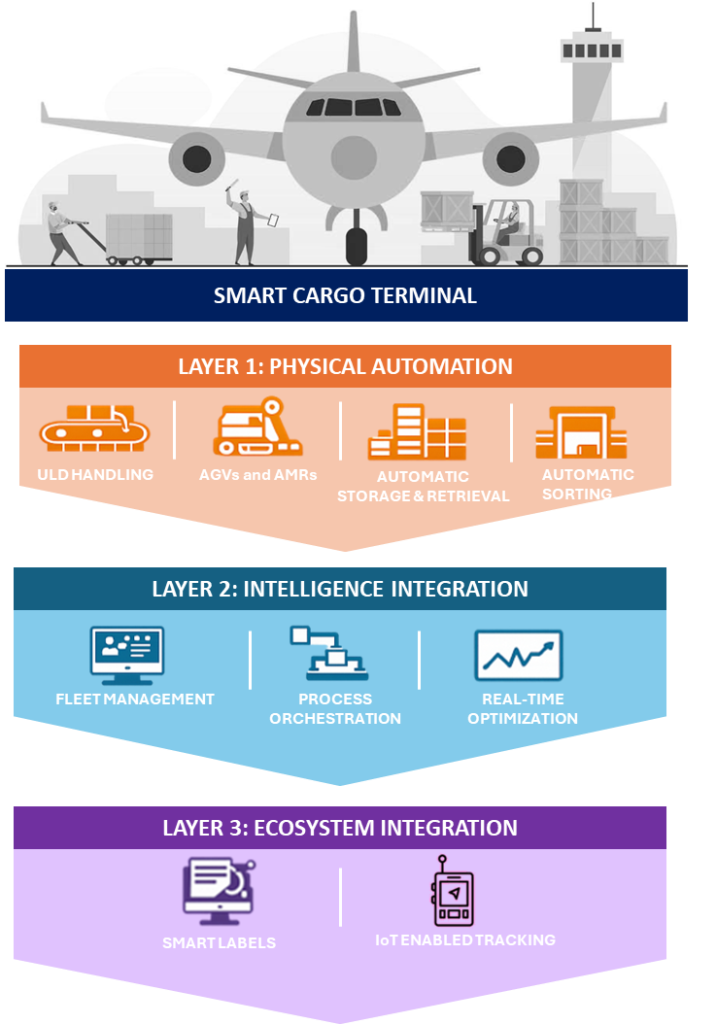
Layer 1: Physical Automation
Automation is the first and most tangible step. It addresses the highest-visibility pain points — manual handling inefficiencies, peak-period bottlenecks, ULD damage, and the safety risks inherent in labor intensive environments. Technologies in this layer include Autonomous Mobile Vehicles (AMVs), robotic pallet movers, and Automated Storage and Retrieval Systems (AS/RS)
Shanghai Pudong International Airport deployed heavy-load AGVs in their cargo terminal to manage rising e-commerce volume and labour dependency. They deployed six 10-tonne-capacity AGVs integrated with China’s first lift-and-run system. Operating 24/7 with precision control, these systems reduced manual transfers and improved throughput stability.
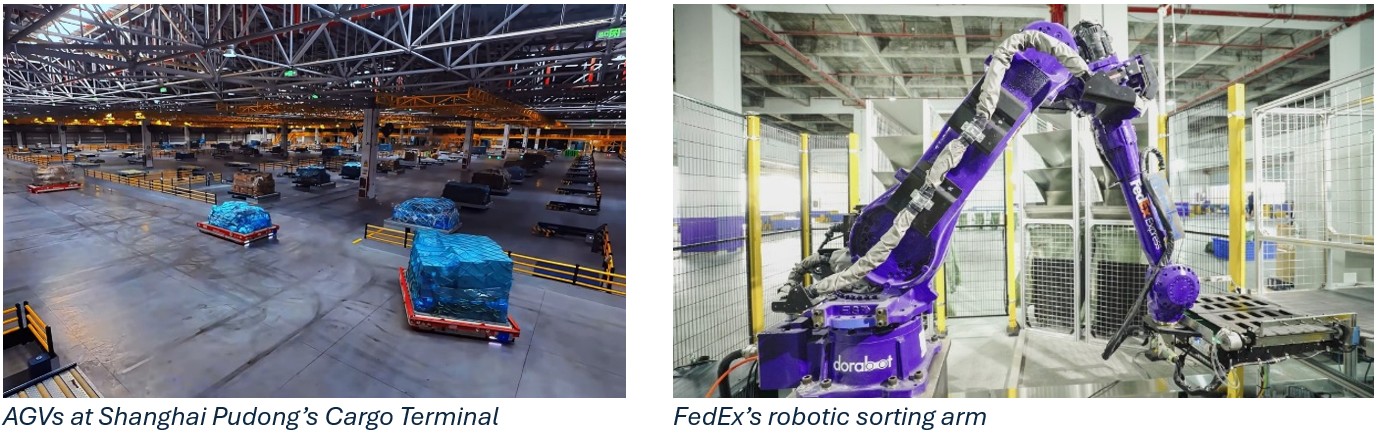
At FedEx South Pacific Regional Hub in Singapore, AI-enabled robotic sorting arms process up to 1,000 parcels per hour across 100 destinations with >98.5% accuracy, while allowing manpower redeployment to higher-value functions.
Physical automation makes the strongest case in environments characterised by high volume, complex handling requirements, or significant space constraints. It delivers measurable gains when deployed correctly.
Layer 2: Intelligence Integration
While Layer 1 would standardize workflows and and increase throughputs, it does not adapt well to real time variability. Unexpected disruptions or fluctuating demand may restrict its efficiency. When artificial intelligence is deployed as the intelligence layer above physical automation, it provides precisely this capability: adaptive decision-making and real-time optimisation across the entire terminal operation. Where automation delivers the execution backbone, AI delivers the decision-making intelligence.
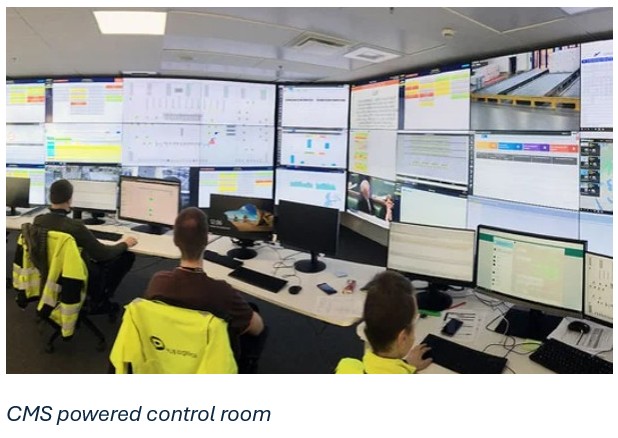
There are several cargo management system (CMS) products that provide an integrated platform covering sales, warehouse management, ULD management, mail handling, revenue management etc. Rather than allowing AGVs, storage systems, and handling equipment to operate as independent automated silos, the CMS integrates them into a unified terminal management platform. Real-time analytics, predictive task allocation, and system-wide visibility through mobile interfaces enable continuous performance monitoring and dynamic resource deployment. These platforms have been deployed in live cargo environments including Shanghai Pudong, Finnair Cargo Terminal, Istanbul’s Mega Hub amongst others.
Layer 3: Ecosystem Integration
While the cargo terminal may be highly automated and intelligently managed, if the broader ecosystem — landside, airside, and city processes operates without real-time visibility into asset location, and systemic inefficiencies persist. Ecosystem integration extends digital visibility to every asset and actor in the cargo supply chain. Smart labels, IoT-enabled tracking, and connected community platforms transform fragmented multi-stakeholder processes into coordinated operations. This is the larger vision.
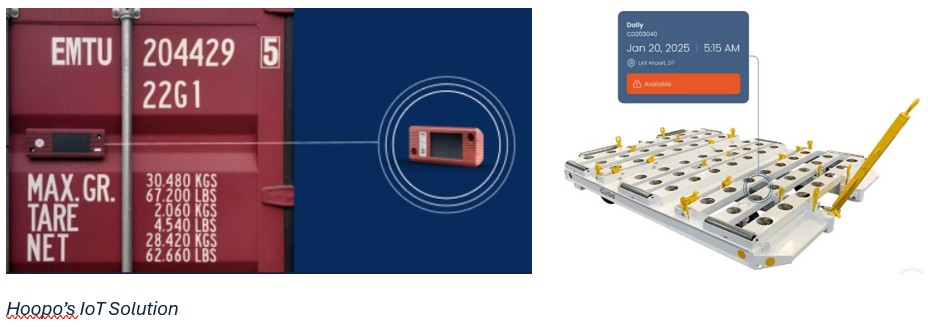
By equipping non-powered assets like ULD dollies, loose pallets, and ground support equipment, with battery-operated trackers, real-time visibility across both airside and cargo zones can be achieved. Hoopo, an Israel based company has deployed its tracking technology at several global airports and reported favourable outcomes. These include a 70% reduction in manual search time for assets and, a 50% faster GSE response times, with direct downstream benefits for aircraft turnaround performance.
At Kempegowda International Airport, Bengaluru, the response was structural. Rather than addressing individual pain points in isolation, the airport built a single digital platform, the Airport Cargo Community System, that connected airlines, customs, freight forwarders, ground handlers, and trucking partners into a shared operational view. Landside congestion, often the most stubborn bottleneck at high-growth gateways, was tackled directly through an automated truck management facility. The results were measurable: average truck turnaround dropped from four hours to one, and 78% of vehicles now enter the terminal within 20 minutes. Export dwell time came down to 13 hours.
The three layers are individually valuable. But the defining characteristic of a genuinely Smart Cargo Terminal is not the presence of any single technology. It is the integration of all three layers into a coherent, data-connected operational system.
Smart Cargo Terminal Technology Integration Checklist
The shift is now visible in India. Recent news about FedEx’s planned ₹2,500 crore automated hub at Navi Mumbai International Airport reflects a greenfield approach where automation is not an operational add-on but a structural design principle. In a market that is expecting sustained e-commerce growth and international cargo, the investment signals that optimization through technology integration is the way forward.
The commercial case is building. What remains is the strategic commitment to execute it, by following a clear framework, layer by layer, rather than defaulting to the incremental, reactive technology adoption that has characterized much of the industry’s recent past.