Airports are, by design, among the most stressful environments humans regularly move through. They are large, loud, and structurally engineered for throughput rather than comfort. The clock is always running. Which is precisely why biophilic design has found such fertile ground here. Studies across neuroscience and environmental psychology consistently show that exposure to natural elements lowers heart rates, reduces blood pressure, improves cognitive function, and shortens perceived recovery time from stress.
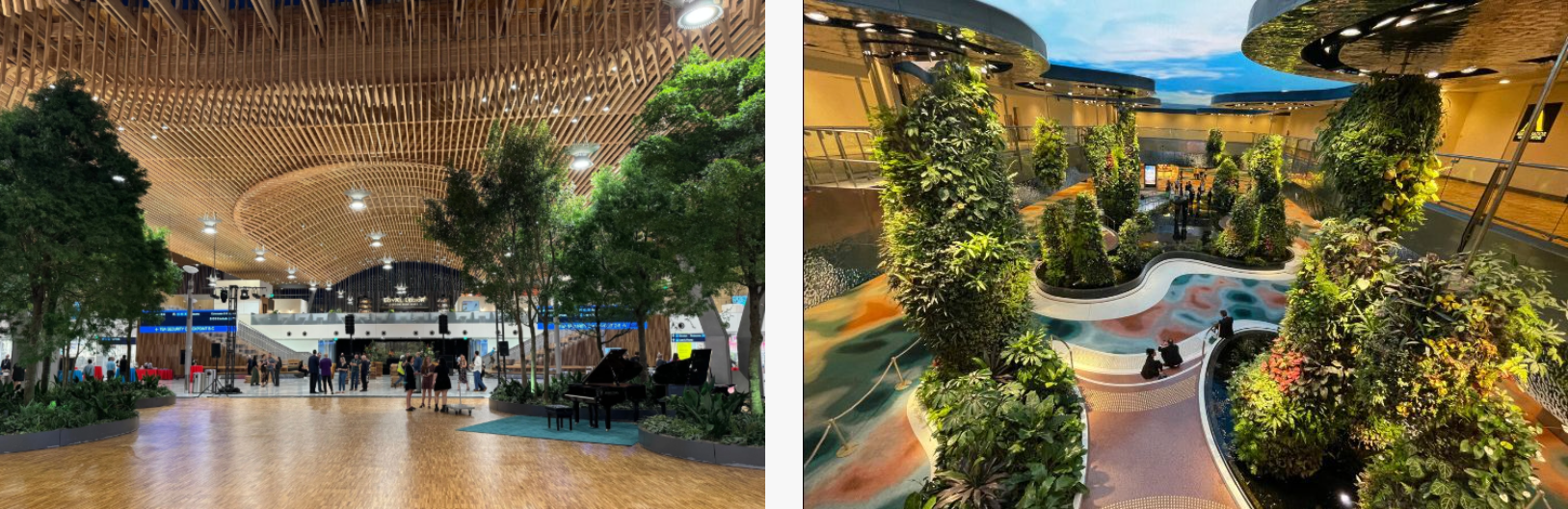
The business case is direct. Calmer passengers dwell longer, spend more at retail and food and beverage, and form more positive associations with the airport brand. There is also a wayfinding dimension. Large terminals are inherently disorienting. Distinctive natural installations can function as memorable landmarks in a way that signage alone cannot. Passengers anchor their spatial memory to the garden, not the gate number.
But it is not without challenges. The hostile indoor environment is the starting point. Terminals are usually deep-plan buildings where natural light does not reach everywhere. They run under continuous mechanical ventilation Airside zones near boarding gates open repeatedly onto the tarmac, creating thermal stress on living plants and posing MEP challenges for consistent growing conditions.
The birds is another challenge, which is more serious in airport context. Bird strikes cost the aviation industry over $1.2 billion annually in repairs and downtime. The cruel irony: naturalistic internal planting is highly attractive to the birds that airport operators are simultaneously mandated to exclude from aircraft. Inside the terminal, bird droppings can enter ventilation systems and nesting material can damage HVAC infrastructure.
Living plant installations require dedicated horticultural staff and irrigation systems maintained around 18-to-24-hour operational schedules, and plant replacement cycles managed without disrupting passenger flow or generating risks.
THE CHANGI LESSON: WHAT SUSTAINED EXCELLENCE LOOKS LIKE
If there is one airport in the world that has consistently excelled in this department, it is Singapore Changi. Not because of Jewel, but because of what sits behind it: a maintenance infrastructure that most airports don’t have and haven’t thought to build.

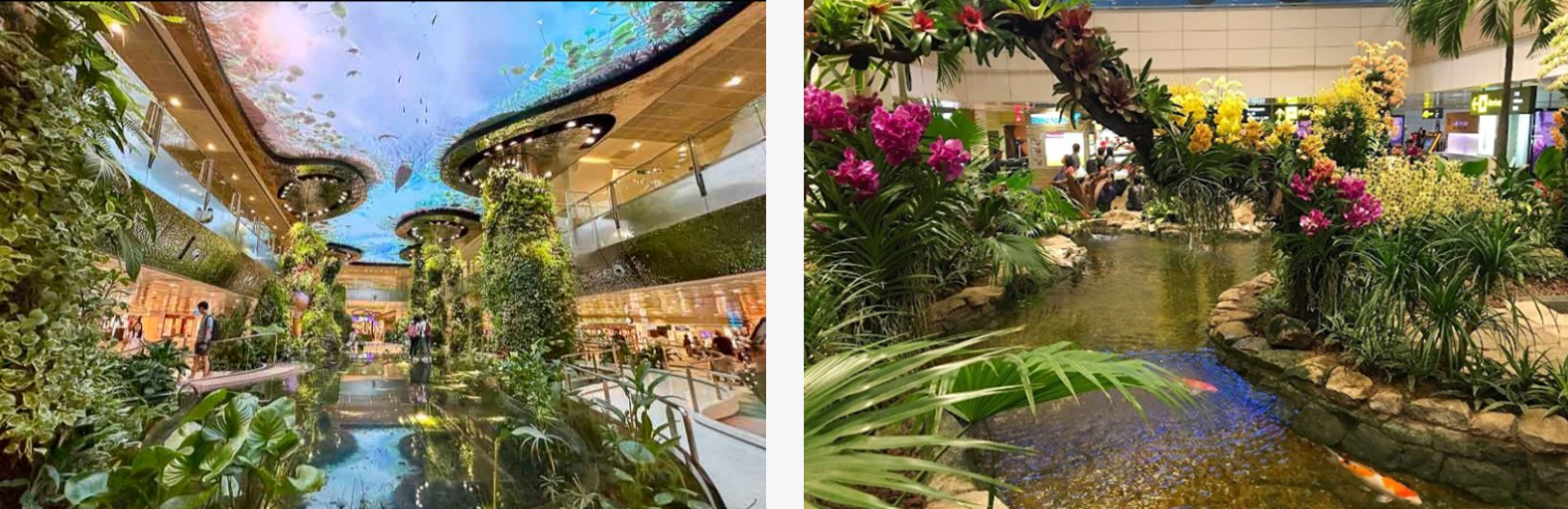
Changi has more than 500,000 plants across its four main terminals, covering some 250 species. It produces approximately 3,000 plants a month in its own nursery. To tend to all of this, the airport employs a dedicated team of horticulturalists.
LESSON 1 Build the Supply Chain Before You Need It
Most airports treat plant maintenance as a procurement function: when something fails, a contractor is called. Changi treats it as a production function. The CAG Plant Nursery — a three-hectare facility nurturing 50 species. It is responsible for the propagation, cultivation, and distribution of display plants, including unique cultivars named after the airport itself: the Bougainvillea ‘Changi Airport’ and the Dendrobium ‘Singapore Changi Airport.’
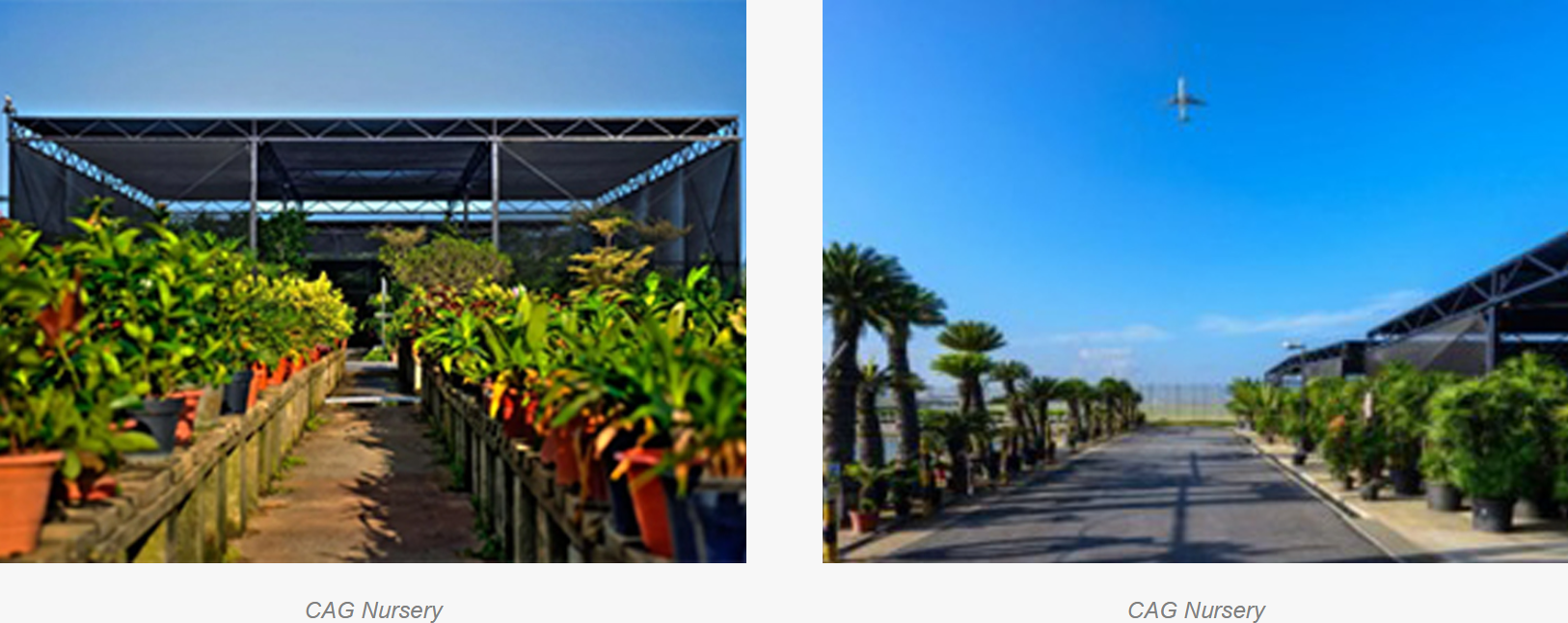
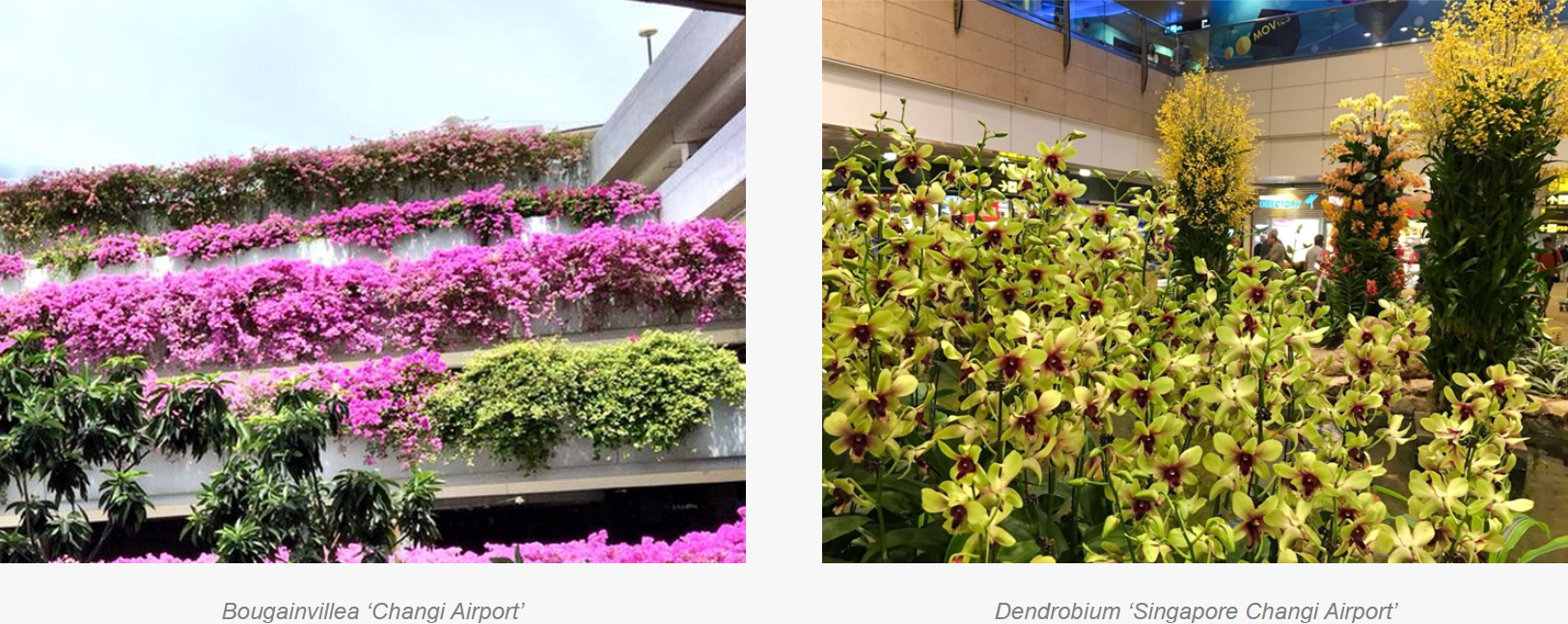
The nursery also functions as a controlled acclimatization environment where plants spend time growing under conditions that approximate what they will face inside the terminal. Without this, every replacement is a procurement event: slow, expensive, and often resulting in plants that fail again within months.
LESSON 2 Treat Species Selection as an Engineering Decision
When Changi was populating Jewel, the procurement process alone took nearly three years. Sourcing more than 2,000 trees and palms and over 100,000 shrubs across 120 species from around the world required nine months of procurement and a further two years of local nursery conditioning. Many trees had to be pruned to fit shipping containers before being nursed back to health on arrival.

The key criterion throughout was not aesthetic preference. Each species was evaluated against its ability to thrive within the complex, given its specific light levels, temperature, and humidity conditions. Horticulture expertise at the design stage is what makes this possible.
LESSON 3 Close the Waste Loop
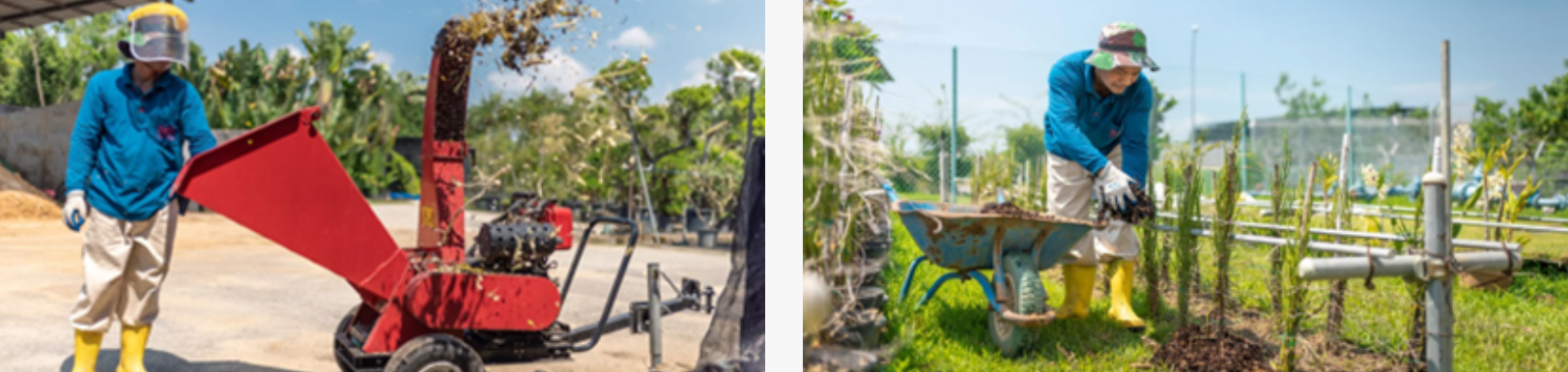
The CAG horticulture team actively diverts waste from its nursery and gardens to be used as compost. The programme is expanding to include horticultural waste from the gardens and from trees along Airport Boulevard.
This matters on two levels. Practically, it reduces the operational cost of waste disposal for a high-volume plant programme. Strategically, it closes the loop — the landscape produces its own inputs. For airports pursuing LEED this is a measurable circular economy outcome.
LESSON 4 Curate Continuously
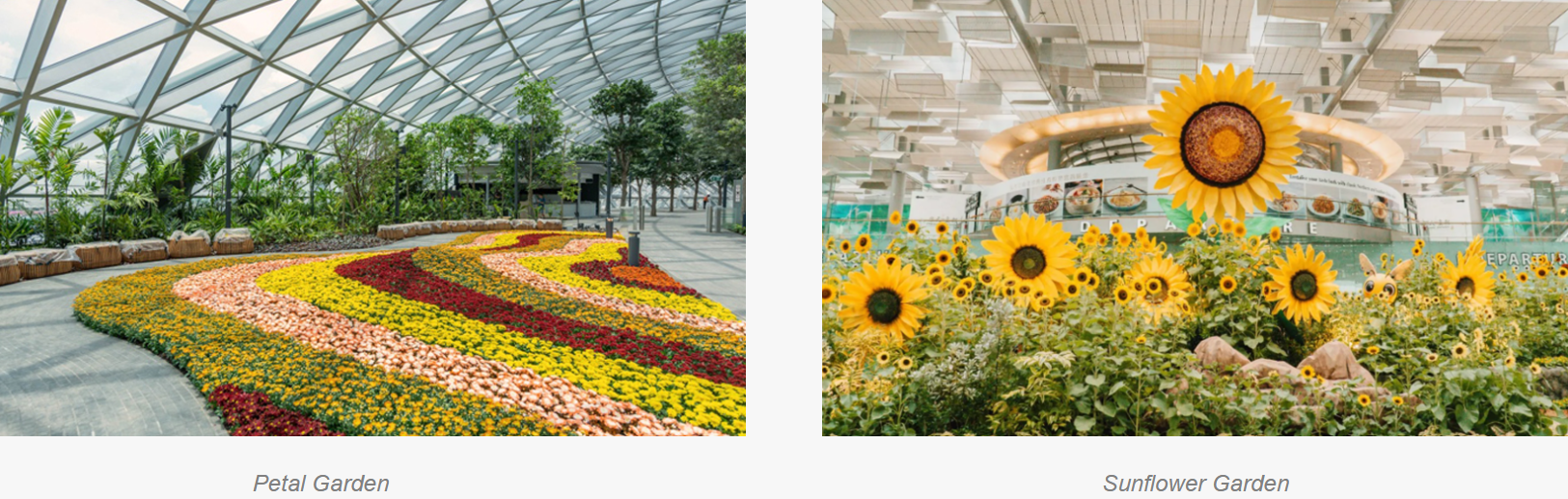
Biophilic design in a terminal is not a one-time capital decision. It is a continuously curated programme — and data is what makes curation disciplined rather than intuitive. The horticulture team uses data analytics to understand what visitors are responding to, using that information to guide the design of seasonal displays.
THE COMMITMENT BEHIND THE CANOPY
The Changi model is always not directly replicable. Especially because of its scale, its government backing, and Singapore’s national identity as a City in a Garden create conditions that are difficult to transplant. But its underlying logic is entirely transferable, and it comes down to institutional decisions rather than financial ones.
Building a sustainable supply chain, treating species selection as an engineering specification and designing for the waste loop from day one. Are all good implementable lessons from Changi.
Nature in the terminal is worth pursuing. The evidence on the benefits is strong. But the forest doesn’t maintain itself. And in an airport, nothing is low-maintenance, unless one plans for it from the beginning.