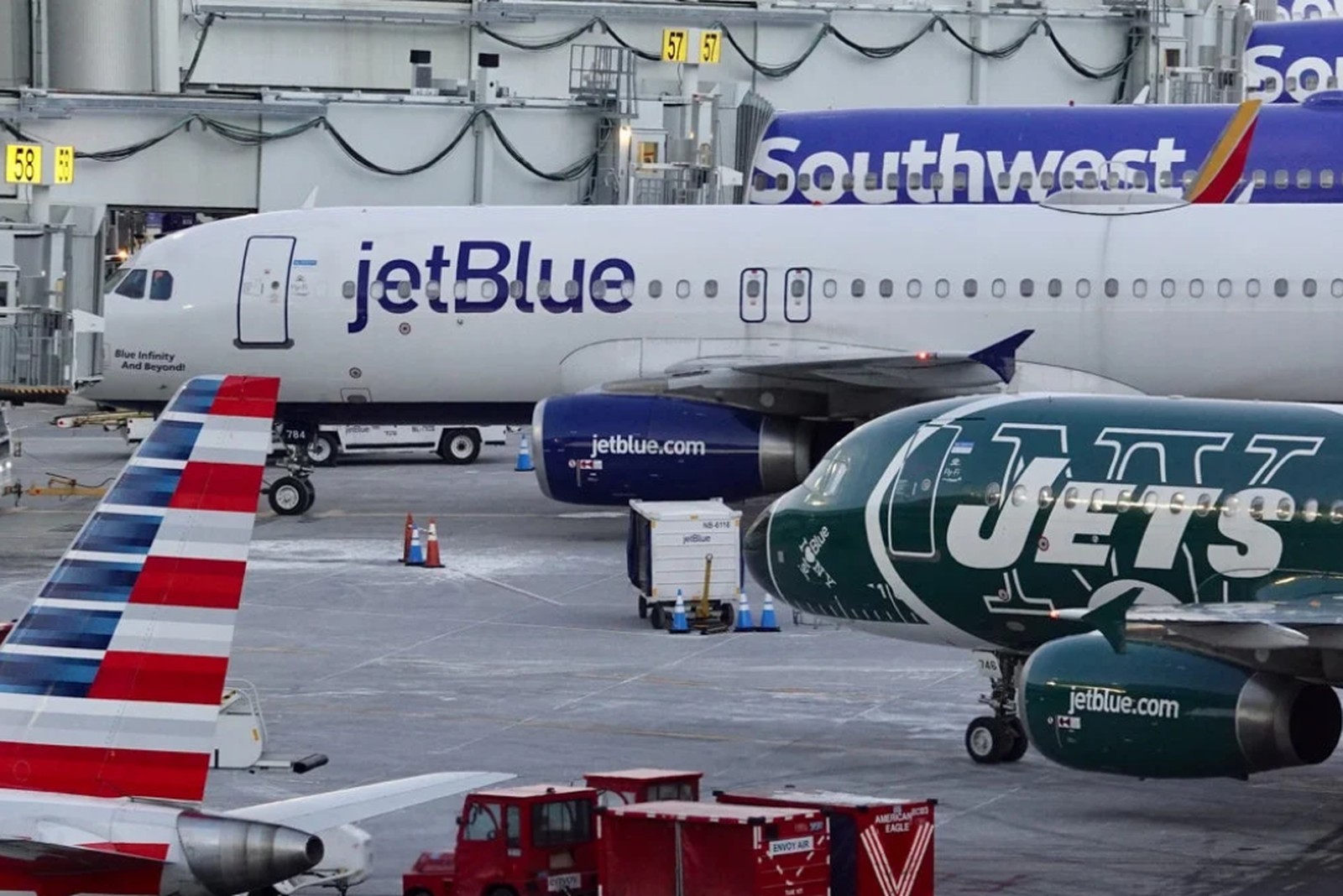
JetBlue Airways has engaged financial advisers to evaluate a potential sale to one of three carriers — Alaska Airlines, Southwest Airlines or United Airlines — as the combination of sharply elevated jet fuel costs and the liquidation of Spirit Airlines reshapes the competitive and financial landscape of US aviation. The move positions JetBlue as one of the most actively pursued acquisition targets in the current consolidation cycle.
Each potential partner presents a distinct strategic calculus. A United-JetBlue combination would offer significant network scale but would face considerable antitrust risk given United’s existing market position. An Alaska-JetBlue pairing would create a carrier with meaningful presence on both US coasts, though Alaska is currently in the midst of integrating Hawaiian Airlines, complicating its capacity to absorb another carrier simultaneously. A Southwest-JetBlue combination is viewed by several analysts as the most structurally viable option, offering strong regulatory prospects and creating the largest domestic airline by seat share at approximately 24% — while also advancing Southwest’s stated strategic goals of long-haul international flying and premium lounge offerings.
The broader regulatory context has shifted in favour of consolidation. The Trump administration’s Department of Justice cleared the Allegiant-Sun Country transaction without challenge, and Transportation Secretary Sean Duffy has explicitly stated that there is “room” for further airline mergers, signalling a materially more permissive stance than the Biden administration, which blocked the JetBlue-Spirit combination in 2024.
Delta CEO Ed Bastian has drawn a direct parallel between current fuel dynamics and the conditions that drove the last major consolidation wave between 2005 and 2016, when nine US carriers were reduced to four.
JetBlue’s sale, set against a backdrop of fuel-driven financial stress and a more accommodating regulatory environment, may prove to be the opening move in a broader restructuring of the US airline market — one with significant implications for slot holdings, network coverage and hub dynamics.