Simulation and Analytics

The need for efficiency in airports has never been more critical, as security and labor costs continue to rise each year. To remain competitive, airport authorities must find ways to optimize expenditures across personnel, equipment, and technology.

Simulation offers a cost-effective, risk-free way to test what-if scenarios and and evaluate operational strategies. It enables rapid adjustments and re-runs, delivering faster, more reliable insights for decision-making.

We strongly believe in leveraging advanced analytics and simulation tools, to provide optimal solutions for our clients. Using latest simulation software, our team of analysts and experts aim to provide insights that enhance decision-making, improve performance, and reduce operational costs.

Scroll to Top

Terminal Simulation

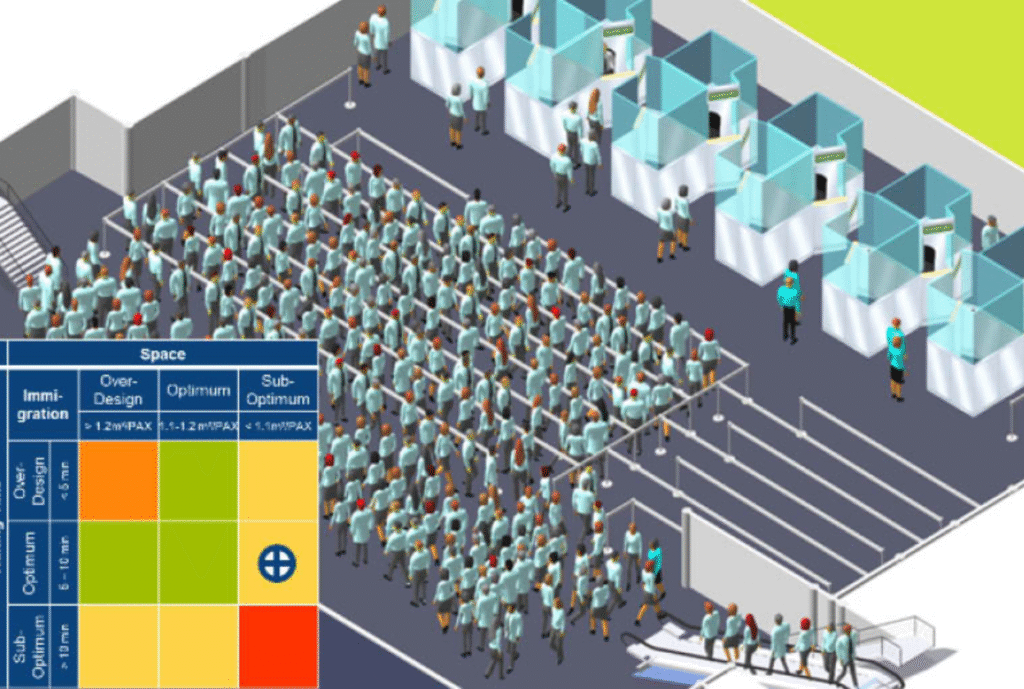
Passenger terminals are dynamic environments where efficiency, safety, and passenger experience intersect. Terminal simulation provides airports with a risk-free platform to analyze flows at check-in, security, immigration, baggage reclaim, and boarding—ensuring bottlenecks are identified and mitigated before they occur.

Using advanced tools such as AirTOP, our experts deliver insights into queue management, facility sizing, and process optimization. The result: smoother passenger journeys, improved resource allocation, and optimized investments aligned with actual demand.

Our comprehensive terminal simulation capabilities complement our CONOPS development services by providing data-driven insights and validation of operational concepts.

Forecasting and
Predictive Analytics

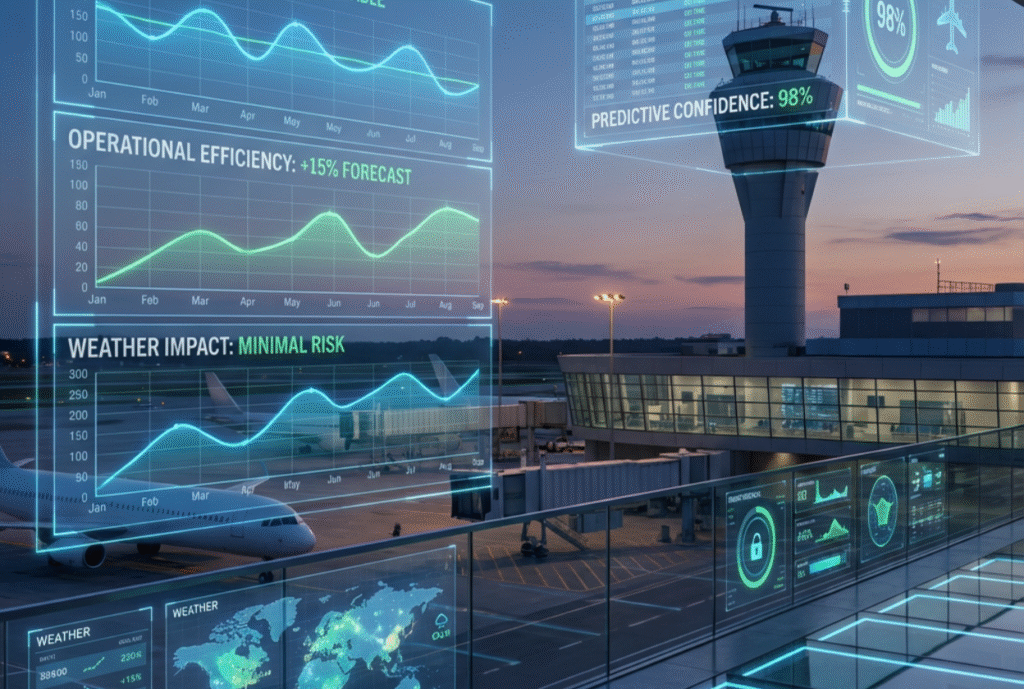
Forecasting is part science and part art — and we have both mastered to the tee. At Avinia, we blend advanced statistical models with deep domain expertise to generate reliable forecasts for passenger traffic, cargo demand, and airport operations.

Autoregressive (AR) modeling is one of the most widely used time series forecasting approaches. Avinia teams uses a range of AR models to generate near-term hourly, daily, weekly and monthly forecasts.

We also recognize that deterministic forecasts often fail to capture real-world complexities. Avinia team uses Monte Carlo simulation makes forecasting more realistic by embracing uncertainty and variability, giving airport leaders the confidence to plan under volatility.

Airfield Simulation

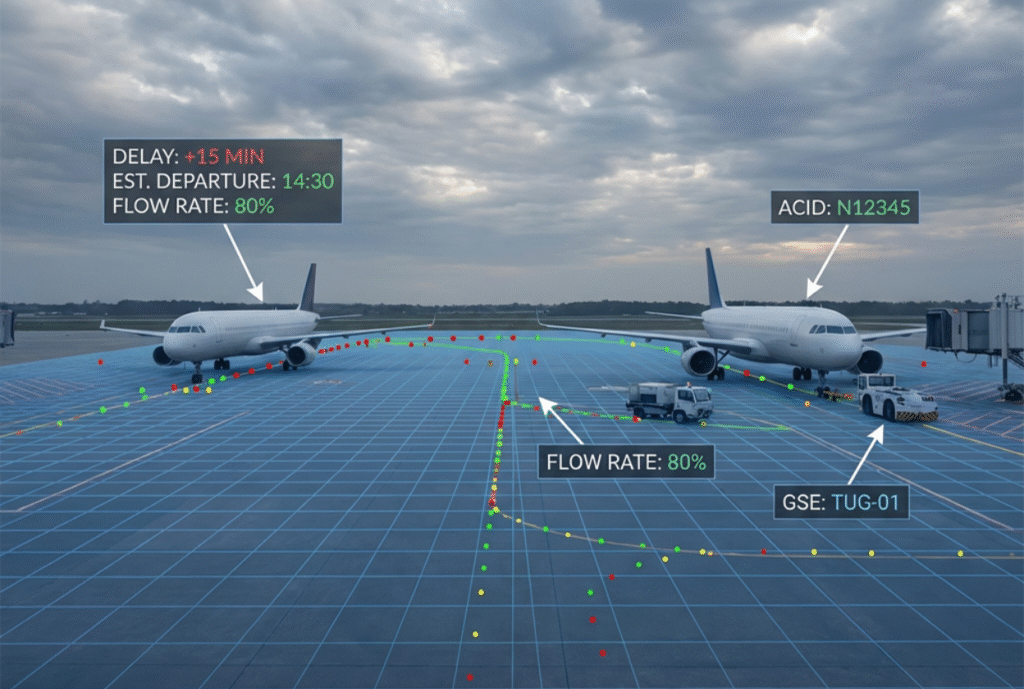
Airfield operations are complex, with every movement impacting safety, efficiency, and capacity. Simulation unlocks the ability to model runway, taxiway, and stand operations in a risk-free environment—helping airports anticipate bottlenecks, optimize layouts, and test new procedures before implementation.

From runway capacity assessments to stand allocation and taxiway flow optimization, Avinia team uses AirTOP Airside Aircraft tool to empower airports to make data-driven decisions with confidence.

Landside Simulation

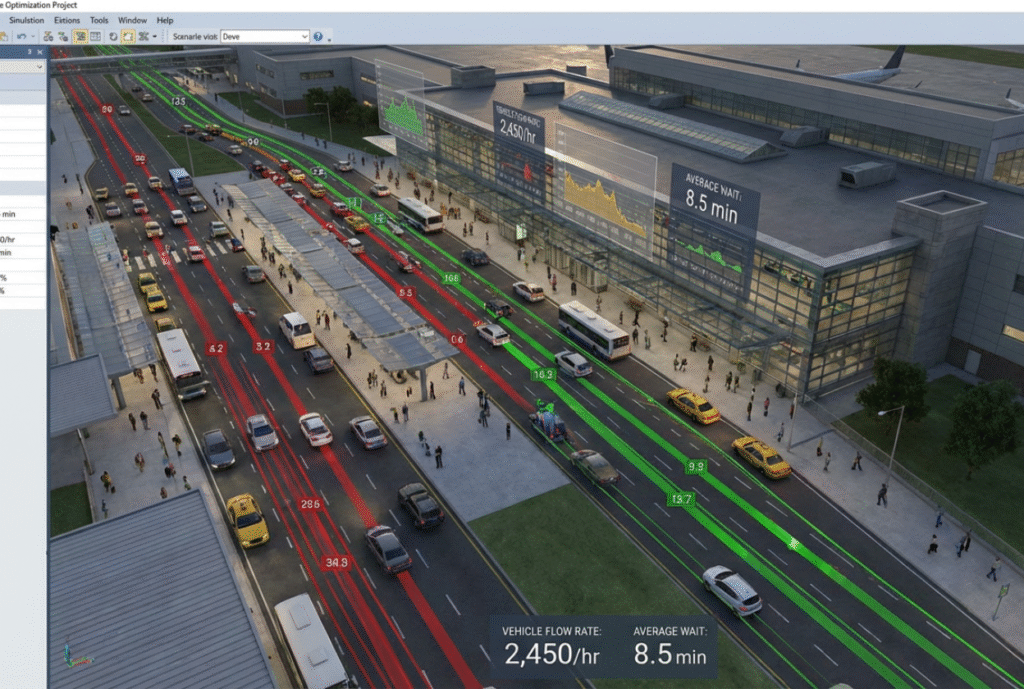
Airport landside zones are where first impressions are made — from pickups and drop-offs, access roads, parking, and public transport connections — and congestion or delays here quickly ripple through the system.

Avinia team uses PTV VISSIM to enable airport planners to model vehicle, pedestrian, and multi-modal interactions in detail: curbside traffic, valet/drop-off zones, transit vehicle arrivals/departures, parking flows, and walking access to terminals.